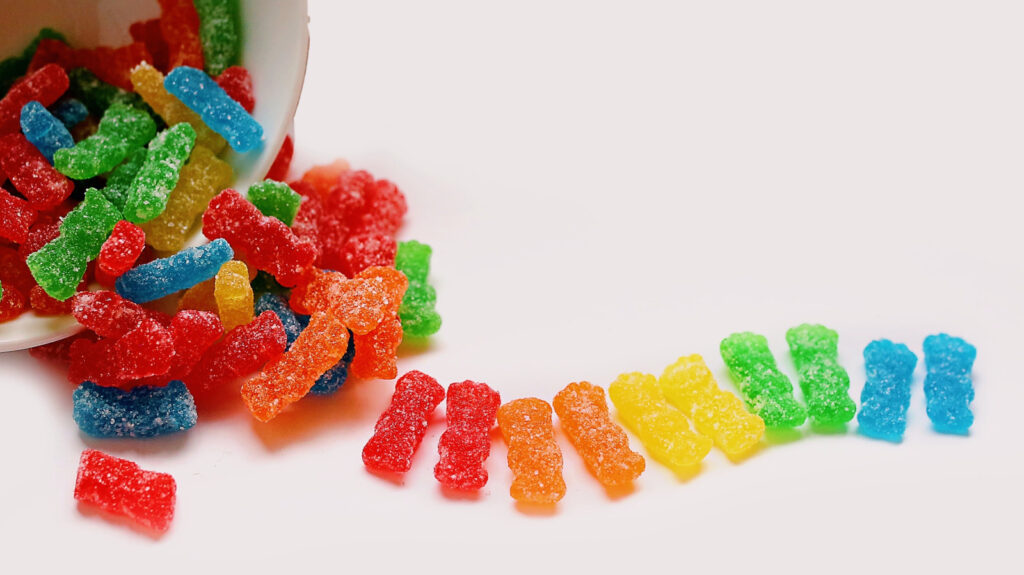
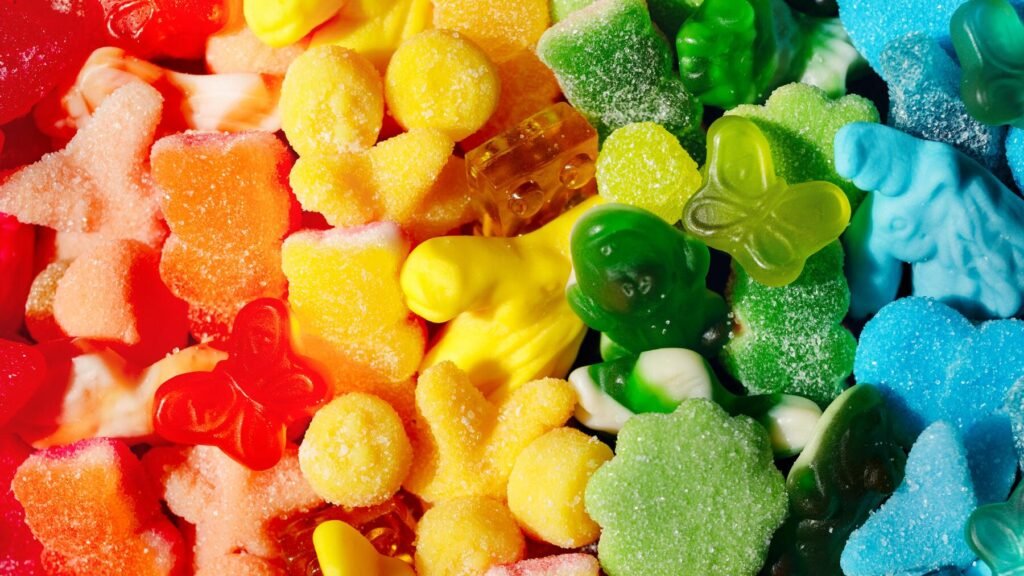
Fumaric acid is widely used in gummy candies to deliver intense tart flavor and optimize shelf stability. It can be found in many popular sour confectioneries such as Sanded Gummy Peaches, Sour Celestial Gummies and Sour Rainbow Sticks. As a professional food ingredients partner, NORBIDAR supplies high-purity, food-grade fumaric acid optimized for modern confectionery production lines.
| Reason for Choosing Fumaric Acid | Benefits |
|---|---|
| Strong sour taste | Makes flavor stronger |
| Stability under high temperatures | Keeps texture the same |
| Preserves product | Makes shelf life longer |
Key Takeaways
- Fumaric acid delivers long-lasting intense tartness to improve the flavor of gummy candies. It maintains the chewy texture of finished products and extends shelf life via pH adjustment. As an approved food additive, it is widely adopted by confectionery manufacturers to keep products in stable quality.
Fumaric acid in gummy candy
What is fumaric acid
Fumaric acid is important in gummy candy taste and texture. This compound is found in some plants like lichen and fungi. Its chemical formula is C₄H₄O₄, and it is a dicarboxylic acid. Food makers add it to foods because it tastes very sour and helps control how acidic the food is.
In industrial confectionery manufacturing, food-grade fumaric acid is required to meet strict purity criteria, such as those defined by the Food Chemicals Codex (FCC) and Joint FAO/WHO Expert Committee on Food Additives (JECFA).
There are two main ways to make fumaric acid for gummies:
| Production Method | Description |
|---|---|
| Chemical Synthesis | This way uses a special reaction to make a lot of fumaric acid quickly and cheaply. |
| Fermentation | This way uses fungi to turn sugars into fumaric acid, which is better for the environment. |
Why use fumaric acid in gummies
Fumaric acid creates distinct, long-lasting tart notes in gummy candies. Compared with other common food acids, it can achieve target sourness with lower addition rates, while preserving the product’s chewy texture.With low hygroscopicity, it prevents excessive moisture absorption and supports stable shelf performance. It also optimizes the working environment for gelling agents. For instance, in high-methoxyl (HM) pectin formulas, maintaining a precise pH window between 3.0 and 3.4 is critical for proper acid-sugar-pectin gel network formation.
How fumaric acid affects gummies
Flavor and tartness
Fumaric acid makes gummies taste extra sour and tangy. It is used in gummy candy to make the flavor stronger. This acid gives a bold sour taste that stands out in sour gummies. The tart flavor lasts a long time, so every bite is more fun. The sour taste stays on your tongue, which many people enjoy in these candies.
| Attribute | Description |
|---|---|
| Flavor | Very strong sour taste |
| Role | Provides a long-lasting sour flavor |
| Stabilization | Helps stabilize gelling agents at high temperatures |
| pH range | 3.5 – 4.0 |
| Common Uses | Commonly used in sour gummy candies |
The controlled tartness in gummies relies on the buffering capacity and pH reduction driven by fumaric acid. In typical gelatin or pectin-based gummy matrices, the target pH is usually adjusted to a range of 3.2 to 3.6. Fumaric acid keeps the pH in this optimal range, ensuring that gelling agents cross-link correctly without causing “acid inversion” (sugar breakdown) or weak gel structures.
Acidity and texture
Acidity is important for how gummies feel and chew. Fumaric acid helps control the acidity in the gummy mix. This is needed for the gelling process to work well. When the acidity is right, gelling agents like pectin or gelatin do their job better. This makes gummies chewy and gives them the texture people want.
The gelling process needs the right amount of acidity. Fumaric acid keeps the pH in the best range for this. This helps gummies stay firm but still bendy. The tart taste is also stronger when the acidity is balanced. In sour gummies, the right acidity makes sure the taste is both tart and good.
Fumaric acid does not pull in much water from the air. This helps gummies stay chewy and not get sticky. The texture stays the same, even after weeks on the shelf. Candy makers use fumaric acid to keep the gelling process steady and the gummy mix even.
Shelf life and preservation
Fumaric acid acts as an acidulant to regulate product pH, maintaining stable texture and preventing excessive stickiness or softening during storage. Proper pH conditions protect the gel structure of gummies and keep appearance consistent over time.
Gummies with fumaric acid last longer than those with other acids. Here are some reasons why:
- Fumaric acid reduces product pH to create an acidic environment that inhibits the reproduction of common spoilage microorganisms indirectly.
- It helps keep the gel in gummies, so they do not dry out or get hard.
- Fumaric acid does not pull in much water, so gummies stay fresh.
- The sour and tangy taste stays the same, even after a long time.
The usual pH for gummies with fumaric acid is 3.5 to 4.0. This helps the flavor and keeps the chewy texture and tart taste. Candy makers and buyers pick fumaric acid because it helps gummies last longer and keeps them good in big batches.
Acids in gummy candy: Comparison
Fumaric acid vs. citric and malic acids
Candy makers pick different acids to make gummies sour. Fumaric acid, citric acid, and malic acid each have their own strengths. The table below shows how these acids are different in sourness and other features:
| Acid | Sourness Intensity | Characteristics |
|---|---|---|
| Citric Acid | High | Used in sour candies, comes from citrus fruits, triggers sour taste. |
| Malic Acid | Moderate to High | Gives a long sour flavor, boosts fruit taste, found in apples and other fruits. |
| Fumaric Acid | Strong | Makes gummies very sour, improves flavor, keeps gelling agents stable when hot. |
Fumaric acid is special because it does not dissolve in water as much as citric and malic acids. This helps dry gummy candy stay chewy and fresh. It also keeps gummies stable when hot or stored for a long time. Citric and malic acids dissolve fast in drinks, so they are better for liquid products.
Unique benefits of fumaric acid
Fumaric acid has many benefits that make it different from other acids in gummies. Manufacturers like its strong acidity because they can use less to get the sour taste they want. This saves money and makes it a good choice for factories.
- Fumaric acid gives gummies a sour taste that lasts longer than citric acid.
- It helps gummies taste more like real fruit.
- Its strong buffering ability keeps pH steady, which makes gummies firm.
- Fumaric acid makes gummies feel better, while citric acid does not change texture much.
| Benefit | Fumaric Acid | Citric Acid | Malic Acid |
|---|---|---|---|
| Sour Taste Duration | Sour taste lasts longer | Sour taste fades fast | Sour taste lasts longer |
| Flavor Authenticity | Makes gummies taste like real fruit | Less real fruit taste | Stronger, more real fruit taste |
| pH Stabilization | Keeps pH steady | Not as good at keeping pH steady | Helps keep pH steady |
| Texture Improvement | Makes gummies feel better | Does not change texture much | Helps keep texture steady |
Fumaric acid delivers prominent tartness at low dosage, helping manufacturers control production costs. This helps them save money and makes production cheaper. Its special features make it a favorite for companies who want gummies to last longer and taste the same every time.
Fumaric acid safety in gummy candy
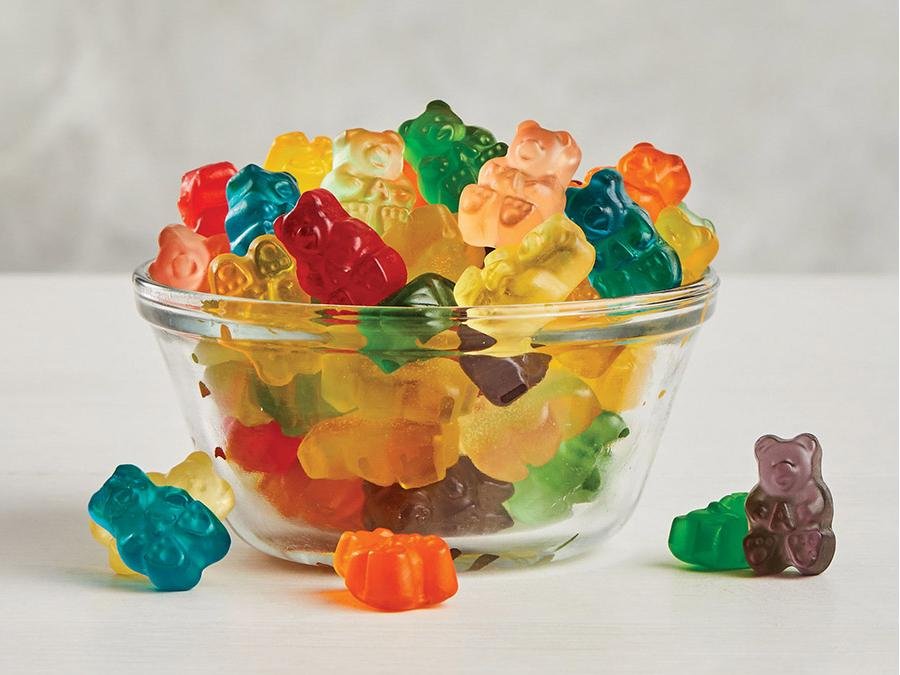
Is fumaric acid safe to eat
Food-grade fumaric acid is an approved additive in the confectionery industry and is safe for consumption by adults and children when within regulatory limits.
Fumaric acid is a naturally occurring organic acid found in many fruits and vegetables. It is also an intermediate product of the human citric acid cycle (Krebs cycle), meaning the body can metabolize it naturally without accumulation. Toxicity studies consistently show that food-grade fumaric acid is non-toxic and well-tolerated at normal dietary intake levels.
Most people do not experience side effects after consuming foods containing fumaric acid. In rare cases, mild stomach pain or skin flushing may occur. Overconsumption may cause problems, but this is uncommon.
Regulatory status and guidelines
Fumaric acid is listed as GRAS (Generally Recognized as Safe) by the U.S. FDA. Different regions and food categories have specified maximum usage limits. Under international food additive standards, the maximum permitted dosage in sugar confectionery is 1000 mg/kg.
| Category | Maximum Allowable Concentration (mg/kg) |
|---|---|
| Sugar Confectionery | 1000 |
| Flavoured Drinks | 1000 |
| Fruit Desserts | 4000 |
Suppliers such as NORBIDAR produce fumaric acid in compliance with international food additive regulations.
Fumaric acid makes gummy candy taste very sour for a long time. It helps gummies stay chewy and fresh. It is safe to use in food if you follow the rules.
Fumaric acid is trusted by people who make food. Find out how food additives help make your favorite snacks!
FAQ
What role does fumaric acid play in gummies?
Fumaric acid gives gummies their very sour taste. It helps them maintain their chewy texture. It also inhibits bacterial growth, thus extending the gummies’ shelf life.
Is fumaric acid safe for children?
Yes, food-grade fumaric acid is completely safe for children when consumed within normal dietary levels as part of confectionery products. It is recognized as safe (GRAS) by global food authorities and metabolized naturally by the human body.
Why do manufacturers choose fumaric acid over other acids?
Confectionery brands prefer fumaric acid primarily due to its exceptionally low hygroscopicity (it does not readily absorb moisture from the air). When used as a sour sanding coating on the outside of gummies, it prevents the candy from sweating, melting, or becoming sticky during storage and transportation. Additionally, because it is highly efficient, manufacturers can use less of it compared to citric acid, optimizing formulation costs. For tailored technical guidance on acidulant blending, the technical team at NORBIDAR helps factories optimize their specific gummy formulations.