Food production regulations require the use of food-grade fumaric acid that meets FCC standards or E297 specifications. Buyers must select not only the regulatory-compliant grade but also the appropriate functional specification. Cold-water soluble products help improve overall processing efficiency, a benefit shared by hot-water soluble variants. NORBIDAR supplies high-purity, food-grade solutions globally; this versatile fumaric acid food additive effectively enhances product quality.
Key Takeaways
- Food makers must pick FCC or E297 grade fumaric acid.
- It must have high purity to ensure safety.
- Cold-water choices mix faster in cold drinks.
- Hot-water types need heat to mix well.
- Fumaric acid gives a strong sour flavor.
- It uses smaller amounts than citric acid.
- This cuts total acid costs for food makers.
Selecting the Right Grade of Fumaric Acid
Food manufacturers must select the appropriate grade of fumaric acid. Safety regulators have established strict purity standards based on health considerations. NORBIDAR operates a smart factory in Zhejiang Province and draws on 15 years of in-depth research experience; its team is dedicated to producing food ingredients with reliable performance.
FCC and E297 Purity Standards
Global industry leaders have established precise physicochemical specifications for ingredients. The *Food Chemicals Codex* (FCC) sets quality guidelines for the North American market, while the European E297 standard aligns with these requirements. Chemical manufacturers must rigorously verify every Certificate of Analysis (COA).
| Parameter | FCC Requirement Threshold | Maximum Allowable Limit |
|---|---|---|
| Assay / Purity | 99.5% – 100.5% (minimum 99.6%) | Not applicable |
| Maleic Acid | Not applicable | ≤ 0.1% |
| Moisture Content | Not applicable | < 0.5% |
Pure fumaric acid gives consistent sour taste always. Low water content keeps powder from clumping together. Low maleic acid levels keep food super safe. NORBIDAR uses smart bioengineering for high purity.
Regulations on Fumaric Acid Food Additives
International bodies evaluate various fumaric acid food additives. The U.S. Food and Drug Administration (FDA) classifies it as a “Generally Recognized as Safe” (GRAS) substance; its Chemical Abstracts Service (CAS) registry number is 110-17-8. The FDA stipulates a maximum usage level of 0.1%.
Relevant European authorities also conduct rigorous reviews of food additives. The European Food Safety Authority (EFSA) has established safe daily intake limits, and the Joint FAO/WHO Expert Committee on Food Additives (JECFA) also supports these safety standards.
| Authority / Jurisdiction | Safety Status & Code | Standard / Specific Limits |
|---|---|---|
| United States (FDA) | Generally Recognized as Safe (GRAS) | Approved with maximum concentration of 0.1% by weight |
| European Union (EFSA) | Approved Food Additive (E 297) | Safe intake level of 780 micrograms per person per day |
| JECFA (FAO/WHO) | Globally Evaluated Additive | Acceptable Daily Intake of 0–6 mg/kg of body weight |
| Australia & New Zealand | Approved Food Additive | Sanctioned for use under code 297 |
European laws set exact fumaric acid limit amounts.
| Food Category | Maximum Permitted Level (mg/kg) |
|---|---|
| Fruit-flavoured desserts | 4000 |
| Fine bakery ware fillings and toppings | 2500 |
| Chewing gum | 2000 |
| Confectionery made of sugar | 1000 |
Selecting fumaric acid food additives that comply with regulatory standards is crucial. NORBIDAR supplies high-quality fumaric acid to help you successfully pass safety audits. Choosing the right fumaric acid product helps safeguard your brand reputation, while selecting the correct grade fosters full customer trust.
Functional Classification of Fumaric Acid in Food
Food manufacturers select products in different physical forms based on formulation requirements. Liquid temperature is a key consideration; processing temperatures dictate the choice of raw materials, and batch mixing processes also require specific temperature conditions.
Cold-Water Soluble vs. Hot-Water Soluble
Conventional hot-water soluble products require heating to dissolve in the mixing tank, whereas innovative cold-water soluble products dissolve rapidly without the need for heat. Food manufacturers evaluate these physical properties to select the most suitable grade of fumaric acid, ensuring all temperature control and production requirements are met.
| Physical Property | Cold-Water Soluble (CWS) Fumaric Acid | Hot-Water Soluble (HWS) Fumaric Acid |
|---|---|---|
| Appearance & Texture | Pure white, extremely fine powder | White crystalline powder with uniform granularity |
| Particle Structure | Instantized with smaller particle sizes | Standard crystalline structure with high purity |
| Ambient Solubility Speed | Dissolves 60%–65% faster in 10–25 °C water | Low room-temperature solubility (~0.6–0.7 g/100 mL at 20–25 °C) |
| Optimal Processing | Designed for quick dispersion in cold or ambient liquids | Requires thermal energy/heating for efficient dissolution |
Some fumaric acid products have poor solubility in cold water and require high temperatures to become fully effective—conditions often found in cooking processes. In contrast, beverage manufacturers prefer cold-soluble products, which are ideal for iced teas and powdered instant drinks. These food-grade fumaric acid additives dissolve rapidly and perform exceptionally well in cold water; their quick-dissolving nature prevents heavy sedimentation, keeping storage tanks clear. Incorporating fumaric acid into beverage formulations helps stabilize acidity, ensuring consistent flavor across product batches.
Particle Size and Microencapsulated Forms
Particle size influences the characteristics of dry mixes. Baking formulations have specific requirements regarding particle size: fine powders blend effectively without causing localized areas of excessive tartness, while granular products offer good flowability, allowing them to pass easily through factory hoppers and move quickly along automated conveyors. Low hygroscopicity prevents clumping, ensuring the product remains dry even in humid environments. Fumaric acid is widely used in large-scale kitchens and food processing plants; as an ingredient in dry seasonings, it extends shelf life and maintains lasting freshness. Manufacturers rely on this stable product to ensure high quality across production shifts.
Yeast dough preparation requires precise timing; premature acidification can inhibit yeast growth, making the mixing stage critical. Using microencapsulated fumaric acid protects the dough and facilitates a smoother preparation process. A vegetable oil coating encapsulates each particle, completely isolating the acid; during baking, the oven’s heat melts the coating and releases the acid, promoting proper dough expansion and ensuring fermentation proceeds as planned. This coating technology allows bakers to control the volume of the finished product and achieve the desired internal crumb structure.
Manufacturers choose fumaric acid food additives to meet specific baking requirements and extend product shelf life. High-quality fumaric acid imparts the right level of tartness to foods while helping bread maintain good structure and volume. Reliable suppliers provide detailed product information, helping factories achieve efficient production.
Key Applications in Food Preservation and Processing

Enhancing Food Preservation and Extending Shelf Life
Fumaric acid helps extend the freshness of food products. It rapidly lowers the product’s pH level, thereby inhibiting the growth of mold, yeast, and harmful microorganisms. As a food additive, fumaric acid penetrates cell membranes and quickly disrupts normal cellular physiological activities. Winemakers often utilize this property to halt fermentation: adding 300 mg/L slows bacterial activity, while adding 600 mg/L completely stops fermentation.
Cost Savings on Acidulants in Food Formulations
This compound offers significant cost savings for manufacturers. Due to its intense sourness, only small amounts are required to achieve the desired flavor profile, thereby reducing the quantity of powder used.
For instance, 2.0 pounds of fumaric acid can replace 3.0 pounds of citric acid—a substitution commonly used in the production of jams and jellies. In gelatin-based products, only 0.6 pounds of fumaric acid is needed to achieve the desired effect, compared to 1.0 pound of citric acid. This smart substitution strategy can cut acidulant costs in half.
Applications in the Beverage, Baking, and Confectionery Industries
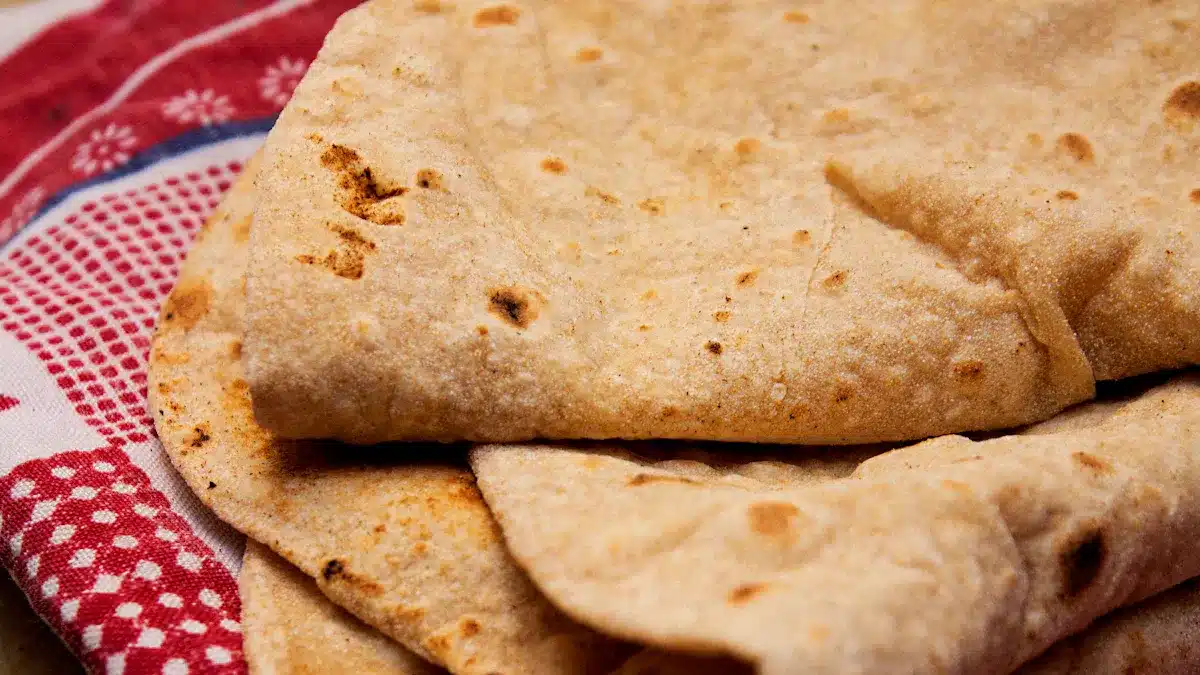
Beverage manufacturers frequently use this high-quality additive; it imparts a clean, tart flavor to fruit juices and provides a pleasant, refreshing acidity to soft drinks. In tortilla production, it helps keep the dough soft, retains moisture, and prevents the dough from hardening during mixing. The lower pH level also enhances the preservative efficacy of calcium propionate. Confectionery manufacturers often choose granular, highly acidic fumaric acid to ensure that sour candies retain their excellent flavor over time. As a versatile food additive, fumaric acid performs exceptionally well and is also effective at controlling moisture content in meat products.
Quality Verification for Fumaric Acid Procurement
Certificate of Analysis Verification
Buyers check every shipment first. Factory teams review test reports carefully. This keeps food very safe. Lab workers test chemical purity now. They use very exact test tools.
| Analytical Method | Mechanism / Detection Basis | Application to Purity & Batch Consistency |
|---|---|---|
| Titration | Neutralization using 1 M NaOH | Quantifies exact fumaric acid percentage on dry basis |
| High-Performance Liquid Chromatography (HPLC) | Column separation with UV-Vis at 215 nm | Separates fumaric acid from maleic acid; detects impurities to 0.001% |
| FTIR / IR Spectroscopy | Infrared absorption spectral profiles | Differentiates target acid (1685 cm⁻¹ peak) from maleic acid (1708 cm⁻¹) |
| Enzymatic Assay | Substrate-specific enzyme reactions | Detects trace fumarate levels in food and feed |
| Gas Chromatography-Mass Spectrometry (GC-MS) | Chromatographic mass detection | Identifies trace impurities across batch samples |
| Physical & Visual Testing | Melting point (286°C–302°C), LOD, residue | Assesses purity to ensure compliance (99.5%–100.5% standard purity) |
Shoppers look at every result. Liquid chromatography finds tiny impurities. FTIR tests confirm correct acid types. Careful checks guard food safety always.
Heavy Metals and Contaminant Limits
Safety rules limit heavy metals. Poisonous metals can harm people fast. Factory guards check suppliers often. NORBIDAR checks every batch for health.
| Heavy Metal | Maximum Permissible Threshold |
|---|---|
| Arsenic (As) | 3 mg/kg |
| Lead (Pb) | 2 mg/kg |
| Mercury (Hg) | 1 mg/kg |
Safety inspectors track toxic items closely. Each fumaric acid food additive passes tests. This happens before truck deliveries start. Pure ingredients protect all buyers today.
Food factories need high purity food grade choices. Purity levels must go above 99.6 percent. Picking the right fumaric acid grade keeps food safe. It ensures compliance with all rules. Makers pick cold-water or hot-water types. These help control pH levels. They save money compared to citric acid. NORBIDAR sells great fumaric acid food additive items. They give full technical reports to partners worldwide.
FAQ
What purity level defines food grade fumaric acid?
Food grade rules need 99.6 percent purity. Factories check every single batch. They keep maleic acid under 0.1 percent. This step keeps the product very safe.
How does cold-water soluble fumaric powder differ from hot-water types?
Cold-water options dissolve much faster in cold liquids. They melt 60 to 65 percent quicker. Normal hot-water powders need high heat. Heat helps them dissolve completely during processing.
Why do food producers choose fumaric ingredients over citric acid?
Two pounds of fumaric acid replace three pounds. They replace three pounds of citric acid easily. This swap cuts acid costs in half. Companies save up to 50 percent fast.