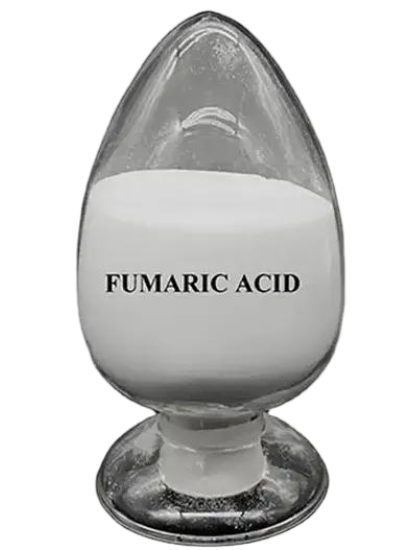
Fumaric acid’s heating stability is one of its most notable characteristics; it does not easily decompose even at high temperatures. It maintains its structure below 277°C, making its heating stability superior to many other organic acids. NORBIDAR’s fumaric acid is a high-quality product renowned for its exceptional stability, trusted by numerous industries to ensure its safety and reliability. This stable acid has wide applications across various fields.
Key Takeaways
- Fumaric acid does not decompose at high temperatures, maintaining its structure up to 277°C, thus making it widely used in many industries. Its unique trans configuration and strong hydrogen bonds give it excellent heat resistance, ensuring product safety and efficacy. Fumaric acid is widely used in the food, pharmaceutical, and construction industries, helping to improve product safety and lifespan, and enhancing structural strength. Fumaric acid has a higher melting point and greater stability than maleic acid, making it more suitable for applications requiring high temperatures. Fumaric acid has a high energy barrier, making it difficult to decompose, thus maintaining reliability during product manufacturing and storage.
Heating Stability of Fumaric Acid
Sublimation and Decomposition Temperatures
Fumaric acid remains stable at high temperatures. Scientists have determined the temperature range within which fumaric acid sublimates and decomposes. Fumaric acid begins to transform from a solid to a gaseous state at approximately 200°C, while its decomposition temperature is much higher. Some reports indicate that fumaric acid begins to decompose at around 230°C, while others report a decomposition temperature between 425°C and 465°C. This wide temperature range demonstrates that fumaric acid can withstand very high temperatures.
The following table lists these important temperatures:
| Parameter | Value |
|---|---|
| Sublimation Temperature | ~200 °C |
| Decomposition Temperature | ~230 °C and 425–465 °C |
Many other organic acids decompose at lower temperatures. Fumaric acid, however, retains its structure even at elevated temperatures. This makes high-quality fumaric acid ideal for industries that require materials to maintain strength when heated.
Why is Fumaric Acid Stable?
Fumaric acid remains stable when heated due to its unique structure. Its molecules are tightly packed, making them difficult for heat to break down. When heated to 277°C, fumaric acid does not change; it only begins to decompose at extremely high temperatures.
This stability is due to the following:
- The atoms in the molecule are tightly bound together by strong bonds.
- The crystal structure hardly shifts when heated.
- Molecular changes or decomposition require a large amount of energy.
Because fumaric acid remains stable when heated, products made from it maintain their excellent quality during processing and storage. This is crucial for the food, pharmaceutical, and industrial sectors. For example, in the pharmaceutical field, high-quality fumaric acid helps ensure the safety and efficacy of drugs, remaining stable even when heated during transportation.
High-quality fumaric acid plays a vital role in the production of animal feed, as well as in products such as resins and plastics. Its chemical stability makes it excellent for these applications. Due to its resistance to decomposition, high-quality fumaric acid has a wide range of uses.
Fuma acid structure
Trans Configuration and Double Bonds
Fumaric acid has a trans configuration. Two carboxyl groups flanking the double bond cause the fumaric acid molecule to extend in a linear fashion. The trans configuration reduces internal tension within the molecule, contributing to its stability upon heating. The double bond is also crucial; it makes the molecular structure rigid, difficult to twist or break. Upon heating, the double bond helps the molecule maintain its configuration, which is essential for maintaining molecular stability.
The table below lists the differences between fumaric acid and maleic acid:
| Property | Fumaric Acid (Trans) | Maleic Acid (Cis) |
|---|---|---|
| Configuration | Trans | Cis |
| Molecular Strain | Reduced | Increased |
| Intermolecular Interactions | Stronger | Weaker |
| Melting Point | Higher | Lower |
| Stability | Greater | Lesser |
Fumaric acid has a higher melting point than maleic acid. This means it can withstand higher temperatures without melting. Its stable crystal structure and double bonds result in lower reactivity. This helps it maintain its structure and function well in many products.
Crystal Lattice and Hydrogen Bonds
Fumaric acid molecules are tightly packed in a crystal lattice. In the lattice, the molecules are arranged in an orderly fashion. This tight packing makes it difficult for heat to break them. Fumaric acid forms strong hydrogen bonds with other molecules. These hydrogen bonds act like glue, binding the molecules together firmly. A significant amount of heat is required to break these hydrogen bonds.
The table below shows the differences in hydrogen bonds between fumaric and maleic acids:
| Property | Fumaric Acid | Maleic Acid |
|---|---|---|
| Hydrogen Bond Sites | Two open hydrogen bond sites | One hydrogen bond site (intramolecular bond) |
| Type of Intermolecular Bond | Strong intermolecular hydrogen bonds | Limited hydrogen bonding due to intramolecular bond |
| Stability | More stable due to stronger hydrogen bonds | Less stable due to limited hydrogen bonding |
Fumaric acid molecules have two open hydrogen bond sites, allowing for strong intermolecular bonding. Maleic acid molecules form internal hydrogen bonds, resulting in weaker bonding with other molecules. This makes fumaric acid more stable and heat-resistant.
The structure of fumaric acid explains its stability under many conditions. The trans configuration, double bonds, and strong hydrogen bonds all contribute to this. These properties make fumaric acid ideal for products requiring heat resistance and the ability to maintain quality.
Thermodynamic and Kinetic Factors
Activation Energy Barriers
Fumaric acid is very stable due to its high activation energy barrier. This means that a significant amount of energy is required for the molecule to undergo a configurational change or breakage. The trans configuration keeps the carboxyl groups far apart, reducing molecular strain and enhancing stability. Scientists have noted that the equilibrium constant for isomerization favors fumaric acid over maleic acid. The trans configuration is more conducive to stability, therefore fumaric acid is less prone to configurational changes even under heating conditions.
The double bonds in fumaric acid are also crucial. They give the molecule a rigid structure that is difficult to twist. Heating makes it difficult for the molecule to undergo configurational changes or breakage. This high activation energy barrier makes the molecule less susceptible to isomerization and decomposition. This is why fumaric acid exhibits good heat and moisture resistance, ensuring its chemical stability.
The high activation energy barrier of fumaric acid keeps it stable during production, baking, and storage, making it an important raw material for many industries.
Resistance to Isomerization and Decomposition
Fumaric acid has a stable structure that is not easily altered. Its trans configuration and tight lattice make it difficult for heat to cause changes. This stability is crucial for extending shelf life and ensuring safety.
The table below illustrates how this stability of fumaric acid makes it suitable for various applications:
| Evidence Type | Description |
|---|---|
| Heat Resistance | Fumaric acid is more heat-resistant than citric acid, making it suitable for baked goods. |
| Low Water Absorption | Its low water absorption extends the shelf life of dry powders. |
| Inhibition of Microbial Growth | Fumaric acid inhibits the growth of bacteria and mold, ensuring food safety during storage. |
| pH Stability | It helps maintain pH stability, thus extending the shelf life of food. |
The stability of fumaric acid means that products can maintain freshness for a longer period and are safer to use. In the pharmaceutical field, its stability contributes to the long-term effectiveness of drugs. The importance of fumaric acid in the pharmaceutical field stems from its heat resistance and stability. Manufacturers rely on fumaric acid because it is not easily decomposed even under harsh conditions.
Fumaric acid’s excellent heat and moisture resistance makes it a preferred raw material in the food, pharmaceutical, and industrial sectors. Its stability ensures product safety and high quality, thus allowing companies to use it for reliable results.
Comparison of Fumaric Acid with Other Similar Acids
Fumaric Acid vs. Maleic Acid
Both fumaric acid and maleic acid are dicarboxylic acids, but their structures differ. Fumaric acid has a trans configuration, meaning its carboxyl groups are on opposite sides of the double bond. Maleic acid has a cis configuration, so its carboxyl groups are on the same side of the double bond. These structural differences affect the behavior of the acids when heated.
Fumaric acid is more heat-resistant than maleic acid. The trans configuration of fumaric acid causes its molecules to be tightly packed in the crystal. This tight packing forms stronger bonds, thus increasing the melting point. The cis configuration of maleic acid subjects the molecule to greater stress. This stress weakens the bonds and lowers the melting point. When heated, fumaric acid remains stable, while maleic acid decomposes more readily.
The following table lists the main differences:
| Property | Maleic Acid (Cis) | Fumaric Acid (Trans) |
|---|---|---|
| Geometry | Groups on same side, more strain | Groups on opposite sides, less strain |
| Stability | Lower | Higher |
| Melting Point | Lower | Higher |
| Intermolecular interactions | Reduced by intramolecular bonding | Stronger intermolecular bonding |
Stability Trends of Dicarboxylic Acids
Scientists have studied various dicarboxylic acids to understand their stability at high temperatures. Some acids, such as oxalic acid, can enhance the strength of materials by forming cross-links. Others, such as glutaraldehyde, are less stable at high temperatures. Scientists have also investigated the decomposition of metal salts of these acids at different temperatures.
| Findings | Description |
|---|---|
| Role of Oxalic Acid | Increases thermal stability and strength of collagen by cross-linking |
| Comparison with Glutaraldehyde | Oxalic acid has higher thermal stability as a cross-linker |
| Ionic Interactions | Help improve thermal stability and strength of biopolymers |
| Tensile Strength Increase | Collagen becomes 6–7 times stronger after cross-linking |
| Thermal Stability Study | Examined calcium and zinc dicarboxylates under heat |
| Decomposition Kinetics | Measured how fast acids break down at different temperatures |
| Susceptibility Assessment | Checked how temperature affects metal soaps of dicarboxylic acids |
Among these acids, fumaric acid is a special one. Its melting point is approximately 287°C. Above 200°C, it begins to vaporize and does not boil, but decomposes at even higher temperatures. This makes fumaric acid ideal for applications requiring stability at high temperatures. Its extremely high stability means it is not easily decomposed, making it ideal for high-temperature products. The special properties of fumaric acid make it suitable for use in the food, pharmaceutical, and industrial sectors.
Fumaric acid exhibits good heat resistance thanks to its trans structure. It also has a high activation energy, which helps it maintain its structure. Lattice structure and hydrogen bonding further enhance its stability. NORBIDAR’s fumaric acid is trusted by numerous industries for its excellent quality. The table below shows the applications of fumaric acid in animal feed and industrial applications:
| Benefit/Function | Description |
|---|---|
| Mineral Binding | Fumaric acid forms complexes with minerals, improving absorption. |
| Feed Mold Inhibitor and Antioxidant | Fumaric acid acts as a preservative and antioxidant in feed. |
| Promoting Growth Performance | Fumaric acid improves animal growth and health. |
FAQ
Why is fumaric acid stable after heating?
Fumaric acid has a very stable trans structure. Its molecules are tightly packed and difficult to break down by heating. Double bonds and hydrogen bonds further enhance its stability.
What are the uses of fumaric acid?
Fumaric acid is widely used in food, pharmaceuticals, and animal feed. It is also suitable for industrial production. Fumaric acid helps maintain food freshness and contributes to animal health. Furthermore, it can enhance the strength of plastics and resins.
What is the difference between fumaric acid and maleic acid?
| Property | Fumaric Acid | Maleic Acid |
|---|---|---|
| Stability | Higher | Lower |
| Melting Point | Higher | Lower |
| Structure | Trans | Cis |
Is fumaric acid safe for food and medicine?
Scientists say that fumaric acid is safe for food and medicine. It helps maintain the freshness and efficacy of food and medicine. Many countries allow its use in these products.