Fumaric acid can be detected by ultraviolet spectroscopy. This is crucial for the production and sale of food, pharmaceuticals, and animal feed. Accurate detection of fumaric acid helps in verifying product quality and complying with relevant regulations. Robust testing methods ensure that safe and effective products benefit consumers and businesses.
Key Takeaways
- Ultraviolet (UV) spectroscopy is a rapid and reliable method for detecting fumaric acid in food, pharmaceuticals, and animal feed.
- Trace amounts of fumaric acid can be well detected using specific wavelengths (e.g., 205 nm).
- For samples with complex compositions, high-performance liquid chromatography (HPLC) or evaporative light scattering detector (ELSD) should be used to obtain better detection results and more accurate analysis.
Fumaric Acid Detection by UV Spectroscopy

How to Identify Fumaric Acid Using Spectroscopy
Ultraviolet (UV) spectroscopy is an effective method for detecting the fumaric acid content in various products. This method analyzes the amount of UV light absorbed by the sample. Fumaric acid molecules contain specific chemical bonds that allow them to absorb UV light. Companies use this method to determine the fumaric acid content when testing products. Factories and laboratories also use this method to ensure the purity and correct composition of compounds.
Fumaric acid undergoes specific chemical changes under UV light irradiation. The table below illustrates the changes during UV detection:
| Observation | Description |
|---|---|
| Characteristic Peaks | The method looks for strong peaks that match fumaric acid in the UV spectrum. |
| Isomerization | Fumaric acid can turn into maleic acid when it gets UV light. |
| Decarboxylation | The method can also show when acrylic acid forms from fumaric acid. |
Ultraviolet Absorption Spectroscopy and Key Wavelengths
Ultraviolet absorption spectroscopy reveals the region where fumaric acid absorbs light most strongly, making it easier to locate. This method primarily uses three wavelengths: 205 nm, 230 nm, and 385 nm. At these wavelengths, fumaric acid absorbs a large amount of ultraviolet light, making it easier to detect.
Manufacturers and distributors use these wavelengths for testing. This method allows them to quickly test raw materials and finished products. NORBIDAR also uses these tests to ensure that the fumaric acid it produces is suitable for food, animal feed, and other applications.
Limits to Detection and Sensitivity
The limit to detection (LOD) is the lowest concentration of fumaric acid that this method can detect. Ultraviolet (UV) detection can detect fumaric acid as low as 0.2 mg/L. This means the method is highly sensitive and suitable for stringent testing in the food and pharmaceutical industries.
UV detection is rapid, accurate, and inexpensive. Many companies use it for routine testing. NORBIDAR uses this method to ensure that every batch of fumaric acid is tested and complies with relevant regulations.
Fumaric Acid Quality Testing and Practical Considerations
Fumaric Acid Sample Preparation
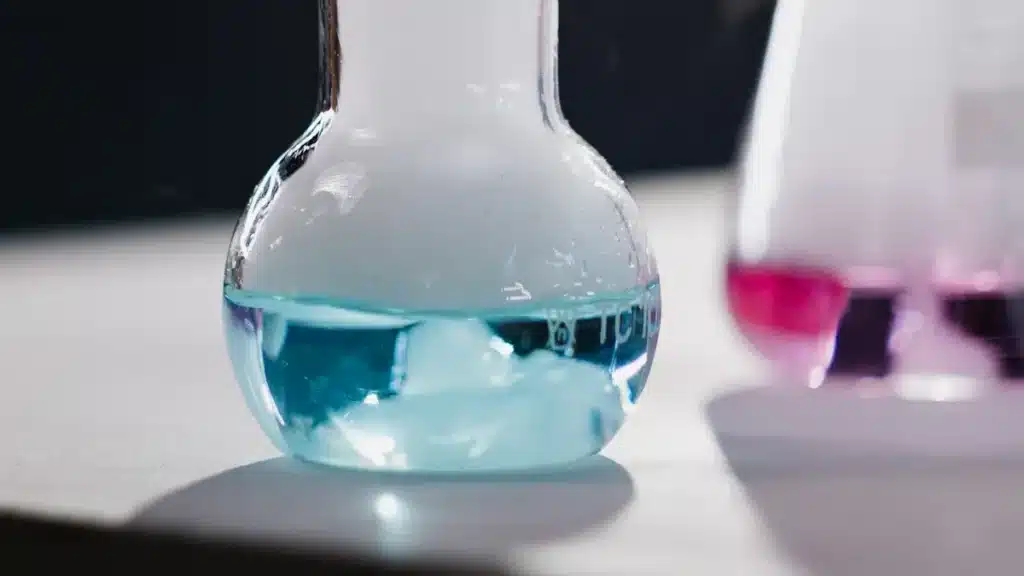
Mix the sample with water or other liquid. This method removes particles and filters the liquid, thus avoiding any substances interfering with the UV-Vis spectrum. In the food, feed, and pharmaceutical industries, detection begins at this step. This method ensures that only fumaric acid is displayed in the spectrum. This helps laboratories and factories have confidence in the test results for each batch.
Factors Affecting the Accuracy of Spectroscopic Analysis
Many factors can affect the accuracy of UV spectroscopy in detecting fumaric acid. The sample may cause variations in ion intensity, thus affecting the detection results. Using a special internal standard helps obtain the correct fumaric acid content. Fumaric acid has many similarities to other acids, so this method can be complex. Significant differences in fumaric acid content in samples and additional steps can increase the difficulty of detection. Laboratories and factories must pay close attention to these factors to ensure the accuracy of the detection.
| Challenge | Description |
|---|---|
| High Polarity | Fumaric acid and other organic acids have high polarity, making them harder to study. |
| Structural Similarity | Many acids look alike, so it is hard to tell them apart. |
| Wide Concentration Ranges | Fumaric acid can be in samples at many levels, making it tough to measure. |
| Derivatization Requirements | Old methods need extra steps, which can slow things down and change results. |
| Ion Chromatography Limitations | Ion chromatography can have trouble with hard samples and peaks that mix together. |
Alternative Methods to UV Spectroscopy for Fumaric Acid
Sometimes, companies use other methods to determine fumaric acid. High-performance liquid chromatography (HPLC) and evaporative light scattering detector (ELSD) are two commonly used methods. HPLC is suitable for complex samples and can detect small amounts of fumaric acid. ELSD is suitable for compounds without chromophores, making it ideal for the determination of fumaric acid. The table below compares these methods:
| Method | Description |
|---|---|
| ELSD (Evaporative Light Scattering Detection) | A way to find compounds without a chromophore, good for fumaric acid. |
| HPLC (High-Performance Liquid Chromatography) | Uses special columns to separate and find fumaric acid. |
HPLC is best when the sample has many things or needs high sensitivity. The table below shows when to pick HPLC or uv spectroscopy:
| Criteria | HPLC | UV Spectroscopy |
|---|---|---|
| Separation of Analytes | Great for hard mixtures | Not as good |
| Sensitivity | Very sensitive | Medium sensitivity |
| Reproducibility | Very repeatable | Can change |
| Application | Used for food and drinks | Used for many things |
NORBIDAR checks its fumaric acid with strong tests. The company follows strict rules to keep fumaric acid pure and safe. Every batch gets checked and tested to meet the rules. This helps people who need good products for food, feed, medicine, and industry.
- Fumaric acid goes through strong tests to make sure it is pure and safe.
- Following the rules is very important for quality testing.
- Companies check all raw materials and machines often.
- A trained team checks every batch to make sure it is safe and pure.
The best way to find fumaric acid depends on the sample, how sensitive the test needs to be, and what the industry wants. NORBIDAR works hard to give customers good fumaric acid for every use.
FAQ
Can manufacturers use UV spectroscopy for quality control of fumaric acid?
Manufacturers use UV spectroscopy to determine the purity of fumaric acid and its content in samples. This method helps factories and suppliers quickly comply with regulations.
What is the lowest concentration of fumaric acid that UV spectroscopy can detect?
UV spectroscopy can detect fumaric acid at concentrations as low as 0.2 mg/L. Laboratories utilize its high sensitivity for rigorous quality control.
Are there other methods for detecting fumaric acid besides UV spectroscopy?
Factories and suppliers use high-performance liquid chromatography (HPLC) or evaporative light scattering detectors (ELSD) to detect samples that are difficult to analyze. These methods offer higher sensitivity and better separation.
Can manufacturers use UV spectroscopy for quality control of fumaric acid?
Manufacturers use UV spectroscopy to determine the purity of fumaric acid and its content in samples. This method helps factories and suppliers quickly comply with regulations.
What is the lowest concentration of fumaric acid that UV spectroscopy can detect?
Ultraviolet (UV) spectroscopy can detect fumaric acid at concentrations as low as 0.2 mg/L. Laboratories utilize its high sensitivity for rigorous quality control.
Besides UV spectroscopy, are there other methods for detecting fumaric acid?
Factory and supplier manufacturers typically use high-performance liquid chromatography (HPLC) or evaporative light scattering detectors (ELSD) to analyze difficult-to-detect samples. These methods offer higher sensitivity and better separation.