Fumaric acid (E297) is a food-grade organic acid authorized by the International Organisation of Vine and Wine (OIV) under Resolution OIV-OENO 581A-2021 (July 2021) and by the European Union under Commission Delegated Regulation (EU) 2022/68 (effective February 2022) for use as a wine additive to delay, prevent, or stop malolactic fermentation (MLF). It is also permitted in the United States (27 CFR § 24.182) and New Zealand.
Key Takeaways
- Fumaric acid at 600 mg/L stops active MLF for >50 days with complete bacterial inhibition
- pH reduction of 0.2–0.3 units provides complementary acidification alongside tartaric acid
- Triangular sensory tests at 300–600 mg/L show no detectable difference (Morata et al. 2019, p < .05)
- Permitted at 300–600 mg/L in EU (EU 2022/68), USA, and NZ
- More microbially stable than SO₂ over time — fumaric acid does not degrade into bound forms
- Effective against Oenococcus oeni but not acetic acid bacteria.
Fumaric acid in winemaking

What is fumaric acid?
Fumaric acid (E297) is a naturally occurring dicarboxylic acid first isolated from Fumaria officinalis (common fumitory). Biochemically, it is a key intermediate in the citric acid cycle (Krebs cycle) — the central energy-producing metabolic pathway in all respiring organisms. This explains its natural presence in fruits, vegetables, and fermented foods.
Industrially, food-grade fumaric acid is synthesized from maleic acid via catalytic isomerization. (Note: maleic acid, the cis-isomer, is chemically distinct from malic acid, with which it shares no structural relationship beyond both being dicarboxylic acids.)
As a food additive, fumaric acid serves as an acidity regulator (E297) in dairy products, breakfast cereals, processed meats, beverages, and salt-and-vinegar potato chips. Its GRAS (Generally Recognized As Safe) status and long history in food manufacturing support its safety profile in regulated oenological use.
Why use fumaric acid in wine?
Winemakers pick fumaric acid for several reasons. It helps make wine better and safer. The table below shows why many winemakers like fumaric acid more than other acids:
| Benefit | Description |
|---|---|
| Flavor Stability | Fumaric acid keeps the taste of wine steady over time. |
| Shelf Life Extension | It stops bacteria and helps wine last longer. |
| Microbial Growth Inhibition | Fumaric acid stops bad microbes from growing and spoiling wine. |
| Low Allergen Profile | Fumaric acid does not cause allergies, so it is healthier. |
| Sulfite Reduction | It helps lower sulfites, which can cause allergies. |
| Secondary Fermentation Prevention | Fumaric acid keeps flavor steady and stops extra fermentation after bottling. |
NORBIDAR is a trusted company. It sells fumaric acid that meets high standards. Adding fumaric acid helps winemakers keep wine stable. It works even when conditions are tough. Using fumaric acid is allowed in the EU, USA, and New Zealand. The recommended amount is between 300 and 600 mg/L. This makes it a good choice for buyers and wine makers.
How fumaric acid controls malolactic fermentation
Fumaric acid’s anti-MLF mechanism is primarily bacteriostatic: it penetrates the cell membrane of lactic acid bacteria (LAB), particularly Oenococcus oeni, and disrupts intracellular pH homeostasis. At ≥300 mg/L, it inhibits bacterial proliferation; at 600 mg/L, Morata et al. (2019) observed complete cessation of active MLF with 7–8 log CFU/mL initial populations for >50 days, with bacterial cells undetectable on selective media afterward.
Efficacy is enhanced by lower pH and higher ethanol concentrations — conditions that synergize with the acid’s passive membrane diffusion. A critical distinction: fumaric acid inhibits lactic acid bacteria but does not control acetic acid bacteria (e.g., Acetobacter). Winemakers must maintain adequate SO₂ levels as a complementary safeguard against volatile acidity.
Fumaric acid effect on pH and wine quality
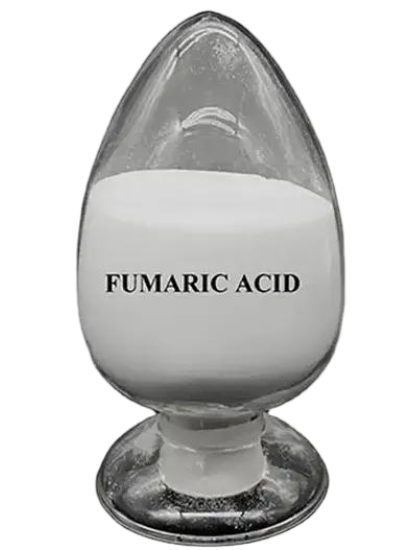
Fumaric acid effect on pH and acidity
Fumaric acid helps winemakers change how sour wine is. It can make wine more acidic when added. Its effect on pH is not as strong as other acids. This is helpful for wines with high pH. It helps control malolactic fermentation in these wines. Companies like NORBIDAR sell fumaric acid that is high quality. Winemakers use it to keep acidity steady and stop bad bacteria.
| Acidulant | Effect on pH Levels |
|---|---|
| Fumaric Acid | Stops lactic acid bacteria; works less well as pH goes up |
| Tartaric Acid | Lowers pH more than fumaric acid does |
| Malic Acid | Changes pH and acidity in different ways than fumaric acid |
Impact on wine stability and taste
Fumaric acid keeps wine stable by stopping malolactic fermentation. This means wine does not change after it is bottled. The wine stays fresh and tastes the same. Many winemakers use fumaric acid to protect wine from spoilage. It helps keep flavors steady. It also lets winemakers use fewer preservatives.
Note: Fumaric acid works well with other stabilizers like chitosan. This gives even better results.
Comparison with other wine acids
Winemakers compare fumaric acid to tartaric and malic acids. Tartaric acid lowers pH better than fumaric acid. Malic acid changes during malolactic fermentation. Fumaric acid is special because it blocks lactic acid bacteria. It keeps malic acid in the wine. The safe amount is between 300 and 600 mg/L. This follows rules in the EU, USA, and New Zealand.
- Fumaric acid lets winemakers manage fermentation. It keeps wine steady and safe.
- It follows rules in the EU, USA, and New Zealand.
- Winemakers use less sulfite. This helps keep the taste safe.
- People can trust wines made with NORBIDAR’s fumaric acid. These wines are good and safe.
FAQ
Is fumaric acid legal to use in winemaking?
Fumaric acid is authorized by the OIV under Resolution OIV-OENO 581A-2021 (July 2021) and by the European Union under Commission Delegated Regulation (EU) 2022/68, effective February 2022, at 300–600 mg/L post-fermentation. It is also permitted in the United States (27 CFR § 24.182) and New Zealand. South Africa has not yet adopted it — an application must be lodged with the Department of Agriculture by an intended supplier (as of 2024). The OIV is currently evaluating fumaric acid for pH reduction, separate from its MLF-inhibition authorization.
How does fumaric acid stop malolactic fermentation?
Fumaric acid acts as a bacteriostatic agent against lactic acid bacteria (LAB), primarily Oenococcus oeni. It penetrates the bacterial cell membrane in its undissociated form and dissociates inside the cell, disrupting intracellular pH homeostasis and inhibiting metabolic activity. At 600 mg/L, Morata et al. (2019) demonstrated complete cessation of active MLF for more than 50 days, with bacterial populations dropping from 7–8 log CFU/mL to undetectable levels. The effect is enhanced at lower wine pH and higher ethanol concentrations.
How does fumaric acid compare to SO₂ for MLF control?
Morata et al. (2019) found that ≥300 mg/L fumaric acid and ≥50 mg/L free SO₂ had equivalent effects on bacterial populations and malic acid preservation. However, fumaric acid offers superior long-term stability because free SO₂ gradually converts to bound forms, reducing its antimicrobial efficacy. Fumaric acid does not degrade, making it a more reliable long-term MLF inhibitor in bottled wine. A critical caveat: fumaric acid does not inhibit acetic acid bacteria, so SO₂ remains essential for volatile acidity control.