
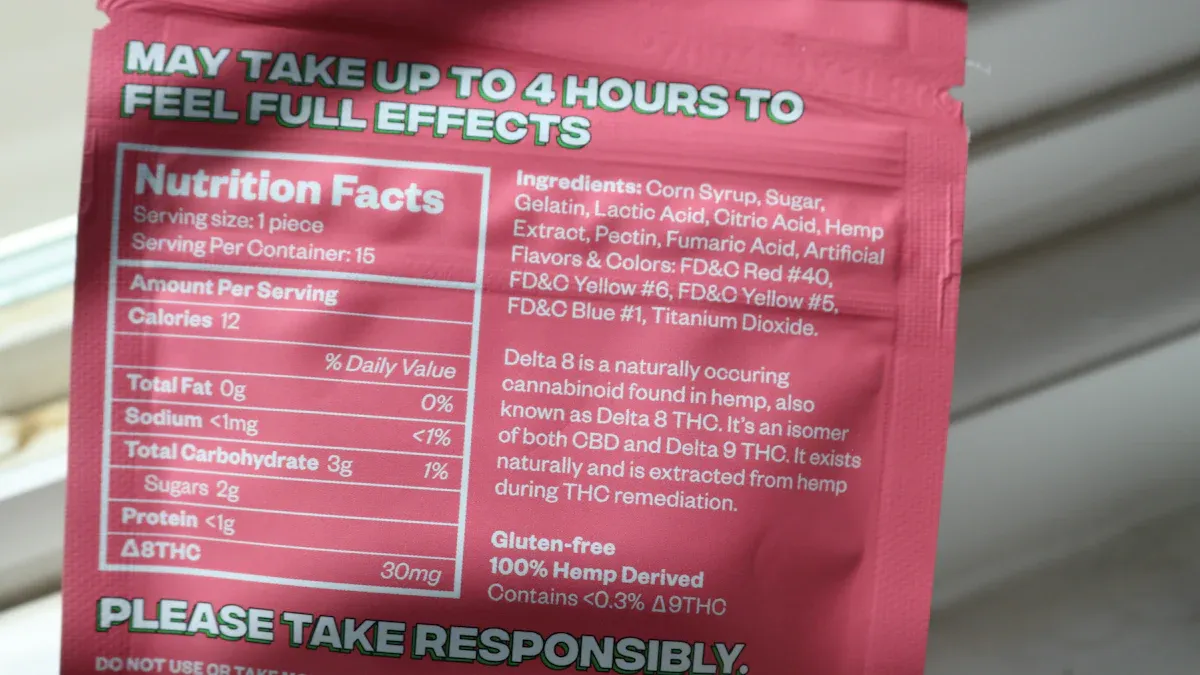
You can find fumaric acid in many places. It occurs naturally in plants and foods, and it is also widely produced by factories. This compound is found in fruits and vegetables, and fumaric acid in food is commonly used to improve acidity and stability. Beyond food, Fumaric Acid For Animal Nutrition and other personal care products helps support formulation performance. Companies manufacture large amounts of fumaric acid for global use; in 2024, about 230 thousand tonnes were produced. The Asia-Pacific region accounts for the largest share, with extensive use across food, beverages, and pharmaceuticals.
Key Takeaways
- Fumaric acid is found in many plants and vegetables. It is in tomatoes, carrots, and different mushrooms.
- Eating many fruits and vegetables gives you natural fumaric acid. This helps your health and gives you energy.
- Fumaric acid is added to food to make it taste better. It also controls sourness and keeps food fresh. You can find it in candies and baked goods.
- In medicine, fumaric acid helps treat some health problems. It is used for psoriasis and multiple sclerosis. This shows it is important in healthcare.
- Factories use fumaric acid in things like plastics and resins. This shows it is useful and important in making many products.
Natural sources of fumaric acid
Plant sources
Fumaric acid is in lots of plants. Arabidopsis thaliana is a small plant used by scientists. This plant has several milligrams of fumaric acid per gram. Soybeans have fumaric acid too, but the amount can change. Fumitory, Iceland moss, and lichens are also good sources. These plants grow in many places around the world. They help add to the natural supply of this acid.
Note: Fumaric acid helps plants make energy and grow. You can find it in both common and rare plants.
Here is a table with studies about fumaric acid in plants:
| Study Title | Findings | Compounds Identified |
|---|---|---|
| Determination of fumaric and maleic acids with stacking analytes by transient moving chemical reaction boundary method in capill… | Measures fumaric acid in fumitory, lichen, and Iceland moss. | Fumaric acid, maleic acid, and others. |
| Variation of Fumaroprotocetraric and Protocetraric Acids in Cetraria islandica and C. ericetorum | Finds fumaric acid in Cetraria islandica. | Fumaric acid, citric acid, pyroglutamic acid, benzoic acid. |
Mushroom and lichen sources
Mushrooms and lichens also have fumaric acid. Many mushrooms you can eat, like boletes, contain this acid. Some examples are Amanita caesarea, Boletus edulis, Gyroporus castaneus, Lactarius deliciosus, Suillus collinitus, and Xerocomus chrysenteron. These mushrooms grow in forests and fields. People use them in many foods.
The table below shows mushrooms with fumaric acid:
| Mushroom Species | Fumaric Acid Presence |
|---|---|
| Amanita caesarea | Yes |
| Boletus edulis | Yes |
| Gyroporus castaneus | Yes |
| Lactarius deliciosus | Yes |
| Suillus collinitus | Yes |
| Xerocomus chrysenteron | Yes |
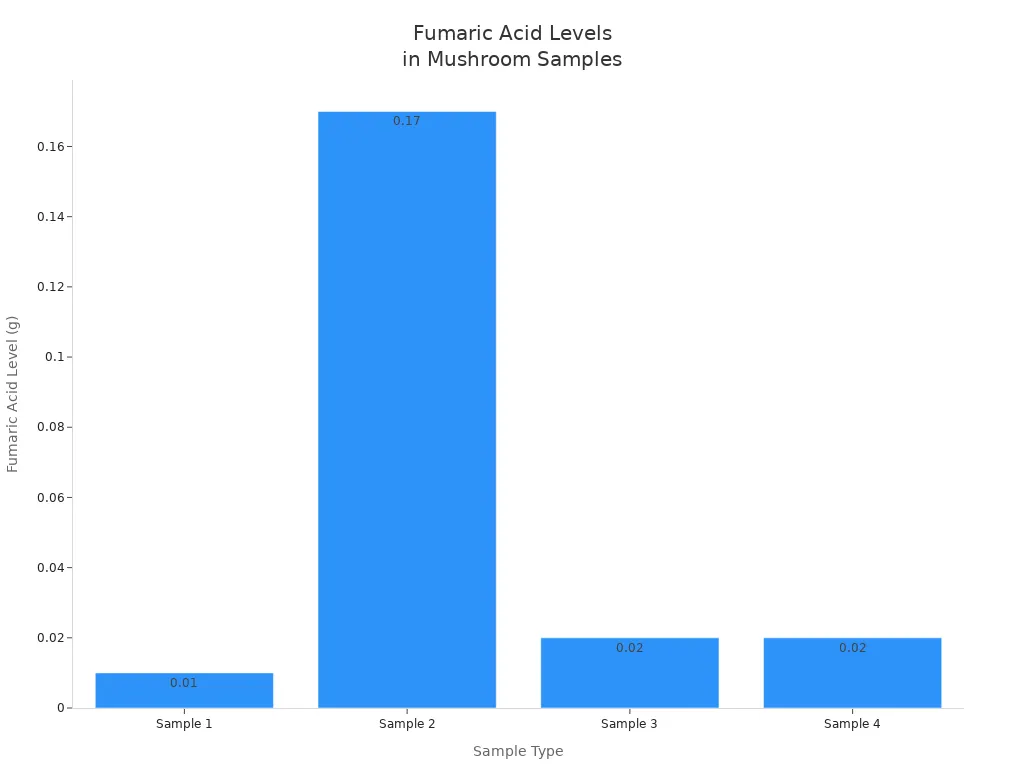
Scientists checked how much fumaric acid is in mushrooms. The amount can be different in each sample. Here are some examples:
| Sample Type | Fumaric Acid Level (g) |
|---|---|
| Sample 1 | 0.01 ± 0.00 |
| Sample 2 | 0.17 ± 0.11 |
| Sample 3 | 0.02 ± 0.00 |
| Sample 4 | 0.02 ± 0.00 |
Lichens and Iceland moss are natural sources too. They live in tough places and help nature stay balanced.
Vegetable sources
Lots of vegetables have fumaric acid. Tomatoes and carrots have high amounts. Other vegetables with this acid are starfruit, onions, chives, celery, cauliflower, cabbage, and potatoes. You can see these vegetables in the table below:
| Plant |
|---|
| Starfruit |
| Onions |
| Chives |
| Celery |
| Cauliflower |
| Cabbage |
| Carrots |
| Potatoes |
You get fumaric acid when you eat these foods. This acid gives flavor and helps your body work well.
Tip: Eating many kinds of vegetables gives you natural fumaric acid and helps you stay healthy.
These natural sources show fumaric acid is everywhere. You can find it in plants, mushrooms, and vegetables all around you.
Fumaric acid in foods and beverages
Naturally occurring in foods
Fumaric acid is in many foods you eat every day. It is found in plants, mushrooms, and some fruits. Grape berries and apple juice have a little fumaric acid. The table below lists foods and how much fumaric acid they have:
| Food Source | Average Concentration |
|---|---|
| Fumitory | Not specified |
| Bolete mushrooms | Not specified |
| Lichen | Not specified |
| Iceland moss | Not specified |
| Beverage | Average Concentration |
|---|---|
| Grape berries | 0.07-10.69 mg/L |
| Product | Average Concentration |
|---|---|
| Apple juice | 0-1.7 mg/L (up to 3 mg/L) |
Fumaric acid is one of many organic acids in food. Fruits have citric acid and malic acid too. Vegetables can have fumaric acid and other acids. Eating many foods gives you a mix of these acids.
As a food additive
Food makers add fumaric acid to foods as E297. It helps control sourness, adds flavor, and keeps food fresh. In the United States, the FDA says it is safe to use. The European Union and Australia also allow it. Here is a table that shows where it is approved:
| Region | Status |
|---|---|
| United States | Generally Recognized as Safe |
| European Union | Approved for use |
| Australia/New Zealand | Approved for use |
Fumaric acid works as an acidity regulator and flavor booster. It also helps baked goods rise. NORBIDAR makes Hot Water Soluble and Cold Water Soluble types. Food makers pick the best one for their needs.
Common food products
Many foods and drinks have fumaric acid. It keeps bread and cakes fresh. It gives candies a strong sour taste. You also find it in jams, sauces, and powdered drinks. Here are some ways it is used:
| Food Category | Application Description | Usage Level/Effect |
|---|---|---|
| Beverages | Makes fruit juices and soft drinks taste more sour. | Gives a fresh sour flavor and balances pH. |
| Baked Goods | Helps bread, cakes, and muffins stay fresh longer. | Keeps texture the same and stops spoilage. |
| Confectionery | Used in sour candies and gummies for a strong sour taste. | Helps candies keep their shape and quality. |
| Processed Foods | Added to sauces, jams, and jellies for better flavor. | Keeps products stable and good to eat. |
You also find fumaric acid in dairy foods, gelatin desserts, meats, cereals, and cheese. It gives foods a lasting sour taste and helps them stay fresh. It also controls how sour or sweet foods are. NORBIDAR’s fumaric acid helps food makers get the right taste and texture.
Tip: When you eat snacks, candy, or drink juice, you might taste the sourness from fumaric acid. This acid makes your food taste better and last longer.
Industrial uses of fumaric acid
Fumaric acid is used in many industries. You can find it in medicines, animal feed, and materials like plastics and resins. NORBIDAR sells high-quality fumaric acid. It comes in Hot Water Soluble and Cold Water Soluble forms. This makes it easy to use in different products.
Pharmaceuticals and supplements
Fumaric acid is in lots of medicines. It helps keep tablets stable and working well. Doctors use fumaric acid to treat psoriasis and multiple sclerosis. Studies show fumaric acid esters help many people with psoriasis. Many patients get much better. Fumaric acid is also in dietary supplements. It helps keep them fresh and safe.
| Application | Description |
|---|---|
| Pharmaceutical Formulations | Used as an excipient in oral medicines. |
| Clinical Treatment | Used for psoriasis treatment and as a component in medicines for the treatment of multiple sclerosis. |
| Dietary Supplements | Helps improve quality and stability of supplements. |
Note: Doctors often choose fumaric acid esters first for treating moderate-to-severe plaque psoriasis.
Animal nutrition
Farmers add fumaric acid to animal feed. It is used for pigs, poultry, ruminants, and dogs. Fumaric acid helps animals digest food better. It helps them grow faster. It keeps their gut healthy by stopping bad bacteria. NORBIDAR’s fumaric acid makes animal feed work better and safer.
| Animal Species | Typical Inclusion Level | Main Benefits |
|---|---|---|
| Pigs | 0.5% – 1% | Better digestion and growth |
| Poultry | 0.5% – 1% | Healthy gut and absorption |
| Ruminants | 0.5% – 1%+ | Safe and efficient metabolism |
| Dogs | 0.5% – 1% | Tasty feed and good digestion |
Studies show fumaric acid helps animals grow and use food well. It also keeps their intestines healthy.
Other industrial applications
Fumaric acid is in many products and materials. It is important for making unsaturated polyester resins. These resins are used in coatings, building materials, and fiberglass plastics. Fumaric acid makes these resins strong and tough. It helps them resist heat and chemicals. Fumaric acid is also in alkyd resins for paints and varnishes. It helps surfaces last longer. Factories use fumaric acid in detergents, cleaners, and plasticizers.
Here is a table showing main industrial uses and market size:
| Application | Estimated Market Size (2024) | Growth Rate (2025-2032) |
|---|---|---|
| Food and Beverage Processing | 65.5% of market revenue | Significant growth |
| Unsaturated Polyester Resins | Fastest growth rate expected | Fastest growth |
| Pharmaceuticals | Anticipated fastest CAGR | Fastest growth |
- The global fumaric acid market was $561.5 million in 2023. It will grow to $748.4 million by 2030.
- More industries use fumaric acid for coatings, resins, and food preservation. This makes demand go up.
NORBIDAR’s fumaric acid helps make strong and safe products for many industries.
Fumaric acid metabolism and biological role
Role in plants and fungi
Fumaric acid metabolism is very important for plants and fungi. It helps them make energy inside their cells. This process lets them grow and stay alive. Fumaric acid is a big part of the tricarboxylic acid cycle, or TCA cycle. The TCA cycle is needed by all eukaryotic organisms, like plants and fungi.
- Plants and fungi use fumaric acid metabolism to get energy from food.
- Fumaric acid is a dicarboxylic acid and is a main part of the TCA cycle.
- Filamentous fungi can make fumaric acid in a special way. They use carbon dioxide and can make more fumaric acid this way.
- Scientists learned in 1910 that fungi could make fumaric acid.
Plants and fungi break down glucose using fumaric acid metabolism. This gives them energy to grow and make new cells. The TCA cycle can make one mole of fumaric acid for each mole of glucose. But the special pathway in fungi can make even more.
Did you know? Fumaric acid metabolism does more than give energy. It also helps plants and fungi build other molecules they need.
Biological significance
Fumaric acid metabolism is needed by all living things, even people. In your body, fumaric acid is part of the TCA cycle. This cycle helps your cells turn food into energy. Fumaric acid comes from succinic acid. An enzyme called succinate dehydrogenase makes this happen. Your cells then use fumaric acid to make L-malate, which is also important.
- Fumaric acid metabolism helps your body deal with low oxygen.
- Fumarate can block some enzymes. This helps your cells change when oxygen is low and keeps iron levels right.
- Studies show eating fumaric acid is safe for most people. Even eating a lot does not hurt humans.
- Some research says fumaric acid can act as a mild laxative in animals.
Fumaric acid metabolism helps plants, fungi, and people live. You use this process every day, even if you do not know it. When you eat foods with fumaric acid, you help your body work better.
You can find fumaric acid in plants and mushrooms. It is also in many foods you eat. Factories make fumaric acid for food, medicine, and other things.
- It helps food taste good and last longer.
- Doctors use it to help with some sicknesses.
- Companies use it to make things strong.
| Industry | Main Benefit |
|---|---|
| Food | Tastes better and stays fresh |
| Pharmaceuticals | Helps treat some illnesses |
| Industrial | Makes products stronger |
Fumaric acid is important in your life and in many businesses.
FAQ
What is fumaric acid used for?
You find fumaric acid in foods, drinks, and medicines. It helps keep food fresh and tasty. Doctors use it in some treatments. Factories use it to make plastics and resins stronger.
Is fumaric acid safe to eat?
Yes, you can safely eat foods with fumaric acid. Food safety groups in the United States and Europe approve it. You often see it in snacks, drinks, and baked goods.
Where does fumaric come from in nature?
You find fumaric in many plants, mushrooms, and vegetables. It also forms inside your body during energy production. Farmers and food makers use it because it comes from both natural and factory sources.
How does fumaric help animals?
Farmers add fumaric to animal feed. It helps animals digest food better and grow faster. It also keeps their stomachs healthy and supports strong growth.
Can you find fumaric in everyday foods?
Yes, you eat fumaric in many foods. It is in bread, candy, fruit drinks, and sauces. It gives foods a sour taste and helps them last longer.