The conjugate of fumaric acid is called fumarate. Fumarate is formed when fumaric acid loses a hydrogen ion. Scientists and businesses utilize fumarate to control chemical reactions and to produce new products. Fumaric acid is found in food, animal feed, pharmaceuticals, and personal care products. Understanding conjugate bases like fumarate helps improve product safety and also supports vital physiological processes in living organisms.
Key Takeaways
- Fumarate is the conjugate base of fumaric acid. It is formed when fumaric acid loses a hydrogen ion.
- Fumaric acid is stable. It is used in food, pharmaceuticals, and personal care products. It helps improve the taste of food and extend its shelf life.
- Understanding the role of fumarate in the citric acid cycle helps in understanding how organisms obtain energy from food.
- The structure of fumarate allows it to participate in important chemical reactions, leading to its applications in many industries.
- Proper storage of fumarate can maintain its activity in areas such as animal feed and pharmaceuticals.
Fumaric acid overview
Structure and Properties
Fumaric acid is a dicarboxylic acid with the molecular formula C₄H₄O₄. It contains two carboxylic acid groups located on opposite sides of a double bond, chemically known as the trans configuration. This configuration makes fumaric acid more stable than maleic acid. In maleic acid, the two carboxylic acid groups are located on the same side of the double bond. Fumaric acid is more stable due to its smaller interatomic distance.
The table below lists the differences between fumaric acid and maleic acid:
| Property | Fumaric Acid (trans) | Maleic Acid (cis) |
|---|---|---|
| Molecular Formula | C₄H₄O₄ | C₄H₄O₄ |
| Configuration | Trans (E) | Cis |
| Carboxylic Groups Orientation | Opposite sides of double bond | Same side of double bond |
| Stability | More stable | Less stable |
| Melting Point | 287°C | 139°C |
| pKa₁ | 3.03 | Lower than fumaric acid |
| pKa₂ | 4.44 | Lower than fumaric acid |
Fumaric acid has a high melting point, ranging from 286 to 302°C. It is readily soluble in water. At 25°C, 6.6 grams of fumaric acid dissolves in 100 milliliters of water. Its acidity constants, pKa1 and pKa2, are 3.02 and 4.44 respectively. These values indicate that it is a weak acid.
Industrial and Biological Applications
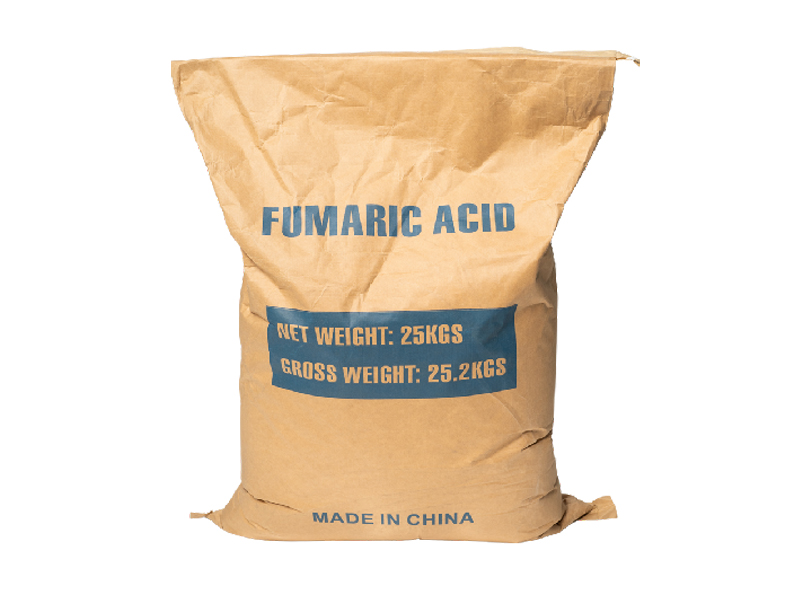
NORBIDAR is a leading producer of fumaric acid, providing high-quality products to numerous industries. In the food industry, fumaric acid is used to improve the taste of foods such as beverages, confectionery, and baked goods. It also helps maintain the freshness and safety of food. In animal feed, it helps animals grow and maintain their stomach health.
Pharmaceutical companies use fumaric acid in drugs. It helps tablets dissolve and helps control the pH of liquid medications. In the personal care industry, it helps maintain the product’s condition and improves skin feel.
Fumaric acid is essential for living organisms. Cells use fumaric acid in the citric acid cycle and convert it into malic acid. This helps organisms obtain energy from food. The unique molecular structure of fumaric acid enables it to play a role in nature and industrial production. The conjugate of fumaric acid is called fumarate. Fumarate also participates in these important reactions.
Formation of Fumarate Conjugates
Chemical Reaction
Chemists call the reaction in which fumaric acid loses a proton a deprotonation reaction. Fumaric acid contains two carboxyl groups, each of which can release a hydrogen ion. When a hydrogen ion leaves, the molecule transforms into a fumaric acid conjugate.
The newly formed molecule is called fumarate, with the molecular formula C₄H₃O₄⁻. This formula represents the removal of a hydrogen atom from the molecule. The negative charge is located on the oxygen atom in the carboxyl group. Scientists point out that fumarate molecules do not contain hydrogen bonds, and their structure remains open and stable.
Note: Fumarate conjugates readily form in water. This process helps control the acidity of many products.
Stepwise Deprotonation
Fumaric acid can lose two protons, but the first step involves the formation of a fumaric acid conjugate. This process occurs in two steps:
Step 1 Deprotonation:
The first carboxyl group loses a hydrogen ion. The molecule becomes the fumarate ion (C4H3O4-).
Step 2 Deprotonation:
The second carboxyl group also loses a hydrogen ion. The molecule becomes a divalent anion, called fumarate (2-).
Most reactions in factories and living organisms use the monovalent anionic form, fumarate (1-). This form is crucial in the citric acid cycle and product manufacturing. The fumarate ion is more reactive and has a wider range of applications because it lacks intramolecular hydrogen bonds.
Scientists and companies like NORBIDAR use fumaric acid conjugates because of their stability and effectiveness. Stepwise deprotonation helps control the acidity and reactivity of food, animal feed, pharmaceuticals, and personal care products.
Structure and Name of Conjugates
Structural Formula
The conjugate of fumaric acid has a simple structure. Chemists have identified it as consisting of four carbon atoms, three hydrogen atoms, and four oxygen atoms, with the molecular formula C₄H₃O₄⁻. One oxygen atom carries a negative charge due to the removal of a hydrogen ion from it. The molecule maintains a trans configuration, meaning that two carboxyl groups are located on opposite sides of the molecule.
Chemists use this structure to study the mechanisms of action of the fumaric acid conjugate in water and organisms.
IUPAC Nomenclature and Common Names
Scientists use several names for the fumaric acid conjugate. Its official IUPAC name is “E-butenedioic acid.” The letter “E” indicates that the molecule is in a trans configuration. Most people refer to it as “fumaric acid.” This name appears in books, research reports, and industry papers.
| Name Type | Name |
|---|---|
| IUPAC Name | E-butenedioate |
| Common Name | Fumarate |
| Systematic Name | (E)-2-butenedioate |
Fumaric acid conjugates play a crucial role in the citric acid cycle. They also help control acidity in food and animal feed. NORBIDAR uses fumarate extensively due to its stability and ease of use.
Importance and Properties of Fumaric Acid
Chemical Stability
Fumaric acid and its conjugate base, fumarate (1-), are very stable. This stability is critical for their application in plants. Fuumarate (1-) remains safe under proper storage conditions. However, bacteria can break it down if exposed to air or water. If fumarate (1-) is heated with water, it converts to DL-malic acid. This occurs at high temperatures. To maintain its effectiveness, the company stores it in tightly closed containers in a cool, dry place.
| Stability Aspect | Details |
|---|---|
| Degradation | Susceptible to degradation by aerobic and anaerobic microorganisms |
| Reaction | Forms DL-malic acid when heated with water at 150–170°C |
| Storage | Should be stored in a well-closed container in a cool, dry place |
These stability properties help workers handle fumaric acid safely. Proper storage conditions ensure that fumaric acid, once bound to proteins, is readily available for use in a variety of products.
Industrial and Biological Significance
Fumaric acid, when bound to proteins, plays a vital role in both nature and the industrial environment. In the citric acid cycle, fumarate helps cells obtain energy from food. This step is essential for life.
In the industrial setting, fumarate (1-) has a wide range of applications:
- Fumarate (1-) is used to treat psoriasis and multiple sclerosis. This demonstrates its value in the healthcare field.
- In animal feed, it keeps feed fresh and prevents mold growth. It also helps animals digest food better.
- Fumarate (1-) is used in the manufacture of unsaturated polyester resins. These resins are widely used in fiberglass, shipbuilding, and piping.
- It helps in the manufacture of heat- and chemically resistant resins. It is also used in the manufacture of specialty chemicals.
NORBIDAR’s premium fumaric acid enhances product performance in multiple areas. The following table lists some of the advantages:
| Application Type | Benefits |
|---|---|
| Construction Materials | Chemical resistance and strength in building panels, roofing, and pipes. |
| Automotive Parts | Lightweight and durable fiberglass plastics for car bodies and interiors. |
| Paints and Coatings | Enhanced adhesion, gloss, and weather resistance in alkyd resins. |
| Adhesives and Sealants | Strong, heat- and chemical-resistant cross-linked polymers. |
NORBIDAR ensures optimal performance of fumaric acid in its products. This makes fumaric acid conjugates significant in scientific and industrial fields.
Fumarates are conjugates of fumaric acid. They play important roles in both factories and organisms. Their unique structure enables them to participate in critical reactions. Many companies utilize fumarates to improve their products. The table below shows the uses of fumarates in various applications:
| Industry | Application |
|---|---|
| Food Industry | Fumarase changes fumaric acid into malic acid |
| Pharmaceutical | Special enzymes help make medicines |
FAQ
What is the difference between fumaric acid and fumarate?
Fumaric acid is uncharged. Fumarate is its conjugate base. Fumaric acid is formed by losing a hydrogen ion. Both are essential for food, factories, and organisms.
Where is fumarate found in the body?
Cells use fumarate in the citric acid cycle. This cycle helps cells obtain energy from food. In this process, fumarate is converted to malic acid.
How does NORBIDAR ensure the high quality of its fumaric acid?
NORBIDAR uses advanced equipment and conducts rigorous testing. They produce fumaric acid in a modern, automated factory. This ensures the purity and safety of fumaric acid, making it suitable for use in food, animal feed, and pharmaceuticals.
Can fumarate be used in animal feed?
Yes! Fumarate helps animals grow and maintains their stomach health. It also helps maintain the freshness of animal feed, ensuring its safety for poultry, pigs, and fish.