
E297 fumaric acid is a food additive widely found in many foods. Companies add it to make foods taste more acidic and extend their shelf life. The letter E297 can be seen on the labels of baked goods, soft drinks, and juices. Fumaric acid also helps control the acidity of food and maintain its freshness. The food and beverage industry has a huge demand for it, and this transparent, odorless compound is also used in pharmaceuticals, personal care, and chemicals.
Key Takeaways
- E297 fumaric acid is a safe food additive. It makes food and beverages taste more acidic and helps extend their shelf life.
- Fumaric acid is found in many fruits and vegetables. This means we often ingest it in our daily diet.
- Families primarily produce this compound in two ways: one is by converting maleic acid into fumaric acid; the other is by fermenting sugars using certain fungi.
- Fumaric acid helps animals maintain health and improves their stomach function. It also helps the human body absorb nutrients from food.
- It can be consumed by people with different dietary habits. It is suitable for vegan, halal, kosher, and gluten-free diets.
E297 Fumaric Acid: Sources and Production
Natural Sources
Fumaric acid is found in many plants and foods. Tomatoes and carrots are rich in fumaric acid. Some mushrooms, such as Boletus, Amanita caesarea, Boletus edulis, Pinot Noir, Lactarius deliciosus, Lactarius deliciosus, and Lactarius argentea, also contain fumaric acid. Other vegetables, such as star fruit, onions, chives, celery, cauliflower, cabbage, and potatoes, contain less. Fruits such as grapes and apple juice are also sources of fumaric acid. These foods demonstrate that fumaric acid is a part of nature and our daily diet.
Industrial Production
Most fumaric acid is produced in factories for use in various products. There are two main methods for producing fumaric acid. The first method is called maleic acid isomerization. Producers use maleic anhydride as a raw material, which can be obtained from butane, butene, or benzene. They convert maleic acid into fumaric acid through chemical methods. The second method is sugar fermentation. A special fungus called Rhizopus can convert glucose or other carbohydrates into fumaric acid. The table below explains these methods:
| Process Type | Description |
|---|---|
| Isomerization of Maleic Acid | Fumaric acid is made by changing maleic acid, which comes from maleic anhydride. Maleic anhydride is produced from butane, butene, or benzene. |
| Sugar Fermentation | Fumaric acid is made by Rhizopus species. They use glucose or other carbohydrates to make it. |
Purity and Form in the Product
Fumaric acid is sold as a white powder. This form facilitates its use in food and beverages. Fumaric acid has low water absorption, thus keeping food dry. It is suitable for use in juices, soft drinks, baked goods, confectionery, sauces, jams, dry powder mixtures, dairy products, and cured meats. Fumaric acid helps add acidity to food, extends shelf life, and improves taste. Food-grade fumaric acid must be extremely pure. Testing results show its purity to be between 99.5% and 100.5%. Other tests include moisture, residues, heavy metals, and maleic acid content. These tests ensure that fumaric acid is safe and effective for human use.
E297 Characteristics of Fumaric Acid

Physical and Chemical Properties
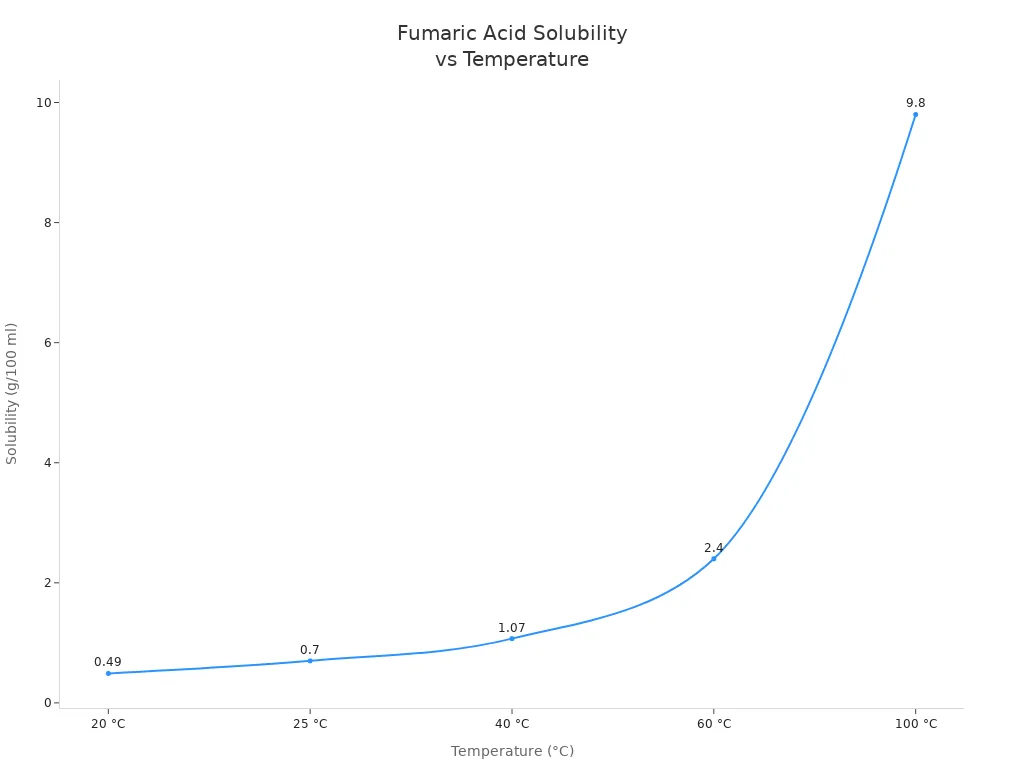
E297 Fumaric acid is a colorless and odorless powder. It exists as needle-like or prismatic tiny crystals, a shape that makes it easy to add to food. This compound is highly acidic, thus contributing to the sour taste of food and extending its shelf life. Fumaric acid melts and decomposes at 287°C. It is not readily soluble in water, but its solubility increases with water temperature. The table below lists some key physical properties:
| Property | Value |
|---|---|
| Melting Point | 287 °C (decomposition) |
| Solubility in Water | 0.49 g/100 ml (20 °C) |
| 0.70 g/100 ml (25 °C) | |
| 1.07 g/100 ml (40 °C) | |
| 2.40 g/100 ml (60 °C) | |
| 9.80 g/100 ml (100 °C) | |
| Acidity (pKa) | pKa1= 3.03, pKa2= 4.44 |
Flavor and Acidity Regulation
Fumaric acid imparts a rich, tangy flavor to foods and beverages. This acidity lasts longer than other acids. It blends exceptionally well with sweet foods, enhancing the texture of snacks and candies. Fumaric acid lowers the pH of foods, especially above 4.5. This helps beverages retain their color and flavor. Fumaric acid dissolves slowly in the mouth, thus prolonging the sour taste. It is approximately 1.5 times more acidic than citric acid, resulting in a more intensely sour flavor. At the same dosage and pH, both fumaric and malic acids produce a stronger sour taste than citric acid. Its rich acidity makes it ideal for dry powders and powdered foods.
Stability and Shelf Life
Fumaric acid is a stable flavoring and preservative. It is more heat-resistant than citric acid, making it ideal for baked goods. Fumaric acid has low water absorption, extending the shelf life of dry powders. Its slow dissolution contributes to its long-lasting sour taste and preservative effect. It inhibits the growth of bacteria and mold, ensuring food safety during storage. Fumaric acid also helps maintain pH stability, thus extending the shelf life of food. Because fumaric acid does not absorb water, it is ideal for use in dry powder mixtures. Companies often combine it with other preservatives to improve food safety. Its strong acidity and stability contribute to extending the shelf life of food.
E297 Uses of Fumaric Acid

Food and Beverage Applications
E297 Fumaric acid is widely used in a variety of foods and beverages. Companies add fumaric acid to give food its acidic flavor and help maintain its freshness. You can find it in bread, baking powder, tortillas, cake mixes, and rye bread. It is also found in grapes, wine, apples, berries, tomatoes, and carrots. The table below lists the fumaric acid content in some foods:
| Product Type | Typical Fumaric Acid Concentration |
|---|---|
| Grape berries | 0.07 to 10.69 mg/L |
| Wines | Less than 31 mg/L |
| Apples | Presence confirmed |
| Berries | Presence confirmed |
| Tomatoes | Presence confirmed |
| Carrots | Presence confirmed |
Fumaric acid food additives help bread and tortillas stay soft and fresh. It inhibits the growth of mold and bacteria by lowering the pH level. This additive does not absorb water, so food stays dry and has a longer shelf life. Its acidity can also enhance the taste of candies, juices, and soft drinks. NORBIDAR offers high-purity fumaric acid food additives for use in these foods, ensuring their safety.
Tip: Fumaric acid food additives keep tortillas soft, prevent spoilage, and extend shelf life.
Animal Nutrition Benefits
E297 Fumaric acid helps improve animal feed and maintain animal health. Farmers add it to the feed of chickens, pigs, cattle, and fish. It helps animals maintain a healthy digestive system and absorb more nutrients. It also inhibits the growth of harmful bacteria. The table below lists the benefits of fumaric acid food additives for different animals:
| Livestock Segment | Uses in Feed | Observed Benefits |
|---|---|---|
| Poultry | Improves gut health, helps absorb nutrients, stops harmful bacteria | Better food safety, improved nutrient uptake |
| Swine | Boosts feed efficiency, supports gut health, helps piglets grow | Faster growth, healthier gut |
| Ruminants | Helps digestion, increases feed intake, supports health | Better feed use, improved health |
| Aquaculture | Improves water quality, helps feed work better, supports growth | Healthier and faster-growing fish |
Farmers have discovered that food additives containing fumaric acid promote animal growth and increase feed intake. It helps animals maintain health and improves the quality of meat, eggs, and fish.
Pharmaceutical and Personal Care Applications
E297 fumaric acid is widely used in the pharmaceutical and skincare industries. Doctors use it as an adjunct treatment for psoriasis and multiple sclerosis. Fumaric acid food additives have antioxidant properties and can protect nerves. It can also enhance the efficacy of drugs and prolong their effects. In the skincare industry, companies add fumaric acid to scrubs, masks, creams, lotions, moisturizers, and anti-aging products. The table below shows the applications of fumaric acid in skincare:
| Use Case | Benefits |
|---|---|
| pH adjuster | Keeps products stable and safe for skin |
| Formulation stabilizer | Makes other ingredients work better |
| Mild exfoliation | Removes dead skin and helps new skin grow |
| Antifungal properties | Fights fungus and calms red, irritated skin |
Fumaric acid, a food additive, gently exfoliates, brightens skin tone, and soothes redness. It helps moisturizers keep skin soft and reduces the appearance of fine lines. NORBIDAR offers high-purity fumaric acid food additives suitable for the pharmaceutical and skincare industries.
Industrial Uses
E297 fumaric acid plays an important role in many factories. Companies use it in the production of polyester resins, alkyd resins, coatings, adhesives, and certain plastics. Fumaric acid food additives help enhance the strength and durability of glass fibers. The following table lists some common uses:
| Application Type | Description |
|---|---|
| Unsaturated Polyester Resin | Main part in making unsaturated polyester resin. |
| Fiberglass Products | Used to make strong fiberglass products. |
| Alkyd Resins | Used in resins for coatings and glues. |
| Low Molecular Weight Polyethylene | Used in making plastics. |
| Coatings | Used in making resins and plastics. |
| Adhesives | Used in glues for many factory jobs. |
NORBIDAR produces high-purity fumaric acid food additives for use in factory production. This additive helps resins and plastics maintain strength, extend their lifespan, and enhance their heat and chemical resistance.
Note: Fumaric acid food additives are an essential component in the manufacture of high-strength glass fiber and tough plastics.
Safety and Dietary Considerations
Regulatory Approvals and Safety
Fumaric acid is permitted for use in food in many countries. Agencies such as the U.S. Food and Drug Administration (FDA) and the European Food Safety Authority (EFSA) assess its safety as a food additive and establish standards for the amount of fumaric acid added to food. Fumaric acid ensures food safety by inhibiting the growth of bacteria and mold. Scientists have conducted long-term research on it. Fumaric acid does not remain in the body but is excreted through urine. Foods containing fumaric acid must adhere to strict safety regulations.
Side Effects and Sensitive Groups
Most people do not experience any problems after consuming fumaric acid. However, some people need to be cautious. People with health problems or weakened immune systems may experience more severe reactions. Children and the elderly should exercise extra caution. Doctors will closely monitor people with low lymphocyte counts. The table below lists the groups who should consume this product with caution:
| Population Group | Sensitivity to Fumaric Acid |
|---|---|
| People with compromised immune systems | may react more strongly to fumaric acid. |
| People with low lymphocyte counts | should not consume excessive amounts. |
| Children | Extra caution is needed when using fumaric acid. |
| Older adults | Special attention should be paid to fumaric acid intake. |
| Individuals with weakened immune systems | Should be closely monitored. |
Doctors use fumaric acid to treat psoriasis and multiple sclerosis. They monitor for side effects during treatment. Most side effects are mild, such as stomach upset or a rash. Always follow your doctor’s advice.
Vegan, Halal, Kosher, Gluten-Free
Fumaric acid is suitable for many diets. It is suitable for vegans and vegetarians. It complies with Halal and Kosher regulations. It is also suitable for celiac disease patients because it is gluten-free. The following list shows its dietary status:
- Safe for vegans and vegetarians
- Complies with Halal and Kosher dietary regulations
- Gluten-free, suitable for celiac disease patients
Tip: If you have special dietary needs, please check the food label.
E297 Fumaric acid is a safe and effective additive. Experts say it can be used in food, cosmetics, and pharmaceuticals. It has many benefits:
- Inhibits bacterial growth
- Enhances the texture of food
- Helps baked goods to rise and regulate pH
- Prevents dry powder mixtures from becoming soggy
People should carefully read food labels, especially those for desserts and fruit-flavored foods.
| Food Group | Max Level (mg/kg) | ADI (mg/kg/day) |
|---|---|---|
| Dry powdered dessert mixes | 4000 | 6 |
| Gel-like desserts | 4000 | 6 |
| Fruit flavored desserts | 4000 | 6 |
FAQ
What does E297 mean on food labels?
E297 is the chemical code for fumaric acid. Food manufacturers use it to add acidity and keep food fresh. Consumers often see it in baked goods, beverages, and snacks.
Is E297 fumaric acid safe to consume daily?
Most people can safely consume foods containing E297. Its use is endorsed by health experts and food agencies. People with specific health needs should consult their doctor first.
Is E297 fumaric acid derived from animals?
E297 fumaric acid is not derived from animals. Manufacturers produce it using plant-based or safe chemical methods. It meets vegan, halal, and kosher requirements.
Can E297 fumaric acid cause allergies?
Allergic reactions to E297 fumaric acid are rare. Most people do not experience problems. Sensitive individuals with any concerns should consult a healthcare professional.