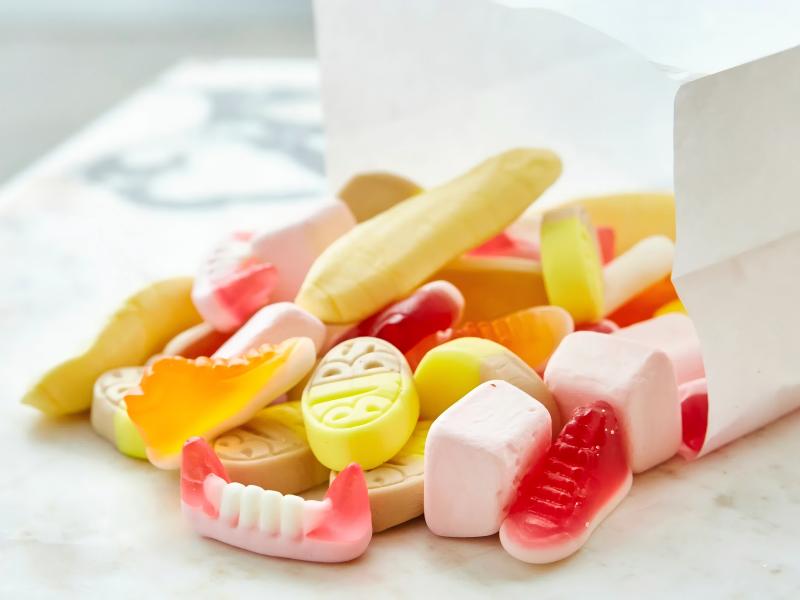
Food-grade fumaric acid is a common functional ingredient added to commercial sour candy. It delivers distinct tart flavor and improves the shelf stability of finished confectionery, facilitating stable sales and logistics for candy manufacturers and distributors worldwide.
Key Takeaways
- Fumaric acid delivers long-lasting pronounced sourness in sour candy, one core reason for its wide adoption by confectionery producers. It reduces moisture absorption of candy and improves product shelf stability to avoid premature deterioration. Thanks to its high effective tartness intensity, lower addition dosage is required compared with many alternative food acids while maintaining target sour flavor.
What is fumaric acid?
Definition and sources
Fumaric acid is an organic dicarboxylic acid with the molecular formula C₄H₄O₄. It participates in biological energy metabolism inside organisms and naturally exists in multiple kinds of fungi, lichens and common vegetables including tomatoes, carrots, onions, celery and potatoes. Typical natural sources also include Fumaria officinalis, bolete mushrooms and Iceland moss. The compound features stable molecular structure and a relatively high melting point.
Industrial fumaric acid is produced via multiple routes including catalytic isomerization, thermal rearrangement and microbial fermentation, with Rhizopus oryzae frequently applied in bio-based production using renewable feedstock. As a leading global supplier, NORBIDAR utilizes advanced, highly automated isomerization processes and eco-friendly manufacturing technologies to produce premium food-grade fumaric acid, ensuring strict compliance with international food safety standards like FCC (Food Chemicals Codex).
Uses in food and candy
Fumaric acid serves multiple functional purposes in food production: flavor acidulation, pH regulation and shelf-life improvement. For sour candy, it creates prominent tart notes and improves product stability. In addition to confectionery, it is widely applied in beverages, bakery and dairy products to strengthen dough structure, prevent agglomeration of powdered raw materials and adjust system acidity. To meet the diverse requirements of large-scale confectionery production, NORBIDAR offers tailored particle size distributions (mesh sizes) of fumaric acid, helping manufacturers optimize dissolution rates and dusting efficiency in sour candy coatings.
Fumaric acid’s functional advantages help confectionery producers achieve target sour flavor and stable shelf performance of finished products.
Why use fumaric acid in sour candy?
Sourness and flavor impact
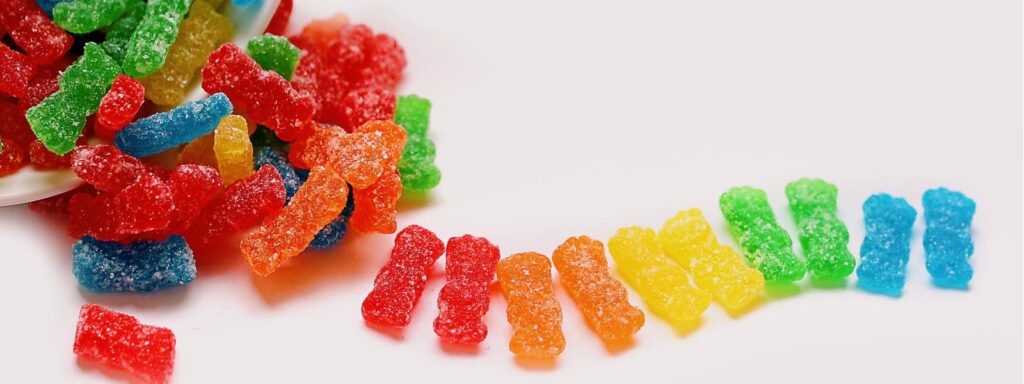
Fumaric acid makes sour candy taste very sour for a long time. Candy makers pick this acid because it gives a strong taste that lasts. Fumaric acid dissolves slowly, so the sour flavor stays longer. This slow release makes eating sour candy more fun for people who like strong sour tastes. Many candy makers and sellers use fumaric acid because it gives a bold and lasting flavor.
The table below shows how fumaric acid is different from other acids in candy:
| Acid Type | Sourness Intensity | Dissolving Rate |
|---|---|---|
| Fumaric Acid | Most intense sourness | Slow dissolving, prolongs sensation |
| Citric Acid | Sharp burst of tartness | Fast dissolving |
| Malic Acid | Smooth, mellow tartness | Enhances fruit flavors |
| Tartaric Acid | Moderately sour | N/A |
- Fumaric acid gives the strongest sourness of all food acids in candy.
- It dissolves slowly, so the sour taste lasts longer and makes eating candy more fun.
- Citric acid gives a quick, strong sour taste, but fumaric acid is better for a long-lasting effect.
This special feature makes fumaric acid a top pick for sour hard candy and other sour treats. The slow sour release keeps the taste strong from start to finish.
Shelf life and moisture control
Fumaric acid improves the shelf stability of sour candy by limiting moisture absorption to avoid product caking during transportation and storage, greatly reducing the risk of spoilage. With low hygroscopicity, it maintains dry texture of finished confectionery. By lowering product system pH, it restrains the propagation of mold and miscellaneous microorganisms to extend shelf life while stabilizing candy’s texture and inherent flavor.
- Fumaric acid boasts an extremely low hygroscopicity compared to other food acids. At a relative humidity (RH) below 80%, it absorbs virtually no moisture. This unique physical property prevents the common “sweating” and caking of sour candies during storage, ensuring a dry surface and a significantly extended shelf life.
- It helps candy last longer by lowering pH and stopping mold and bacteria.
- It keeps the texture and flavor of candy stable.
- Fumaric acid keeps food fresh by stopping water and spoilage.
- It is used in many foods to keep them soft and stop them from sticking.
Compared with citric acid and malic acid, fumaric acid can deliver longer-lasting sour perception alongside superior physical stability, making it a preferred raw material option for large-scale confectionery manufacturers.
Cost-effectiveness and texture
Due to its high tart potency, fumaric acid can achieve target sourness with lower addition rate versus citric acid and malic acid, helping manufacturers optimize raw material usage in candy formulation.
| Acid Type | Cost-Effectiveness | Acid Strength | Required Quantity |
|---|---|---|---|
| Fumaric Acid | More cost-effective | Higher | Lower |
| Citric Acid | Less cost-effective | Lower | Higher |
| Malic Acid | Less cost-effective | Lower | Higher |
Less dosage of fumaric acid is required to reach expected sourness compared with citric and malic acid. Its low hygroscopic property simplifies finished product storage management. Meanwhile, pH regulation function stabilizes candy texture and balances flavor profiles, delivering prolonged sour sensation favored by consumers and confectionery producers.
Fumaric acid vs. other acids
Comparison with citric, malic, and tartaric acids
Candy makers pick from different acids for sour treats. Each acid gives its own taste and effect. The table below shows how these acids taste:
| Acid | Flavor Profile |
|---|---|
| Malic Acid | Sweeter, fruitier taste |
| Citric Acid | Sharp, tart, citrusy flavor |
Fumaric acid is known for strong, long-lasting sourness. Citric acid gives a fast, sharp sour taste. Malic acid has a smooth, fruity flavor. Tartaric acid is only a little sour. These acids make candy feel different in your mouth. Fumaric acid does not dissolve quickly, so the sour taste stays longer. Citric acid makes your mouth pucker the most. People like different sour flavors based on what they eat.
- Each acid gives a special sour taste and mouthfeel.
- Fumaric acid makes candy taste strong and last longer.
- Citric acid gives a quick, sharp sour flavor.
Unique properties in candy making
Fumaric acid has features that help candy makers and sellers. It dissolves slower than other acids, so the sour taste lasts longer. The table below shows how fast each acid dissolves and how they taste:
| Acid | Dissolution Rate | Flavor Profile |
|---|---|---|
| Fumaric Acid | Slower | Long-lasting, sustained sourness |
| Citric Acid | Faster | Bright sourness |
| Malic Acid | Moderate | Crisp tartness |
Fumaric acid does not mix well in water and melts at a high temperature. This makes it stable when factories make and store candy. Factories trust fumaric acid to keep candy the same every time. These features help candy stay fresh and keep its texture. Fumaric acid’s special traits make it a favorite for sour candy.
Fumaric acid makes sour candy taste bold and last longer. Candy makers like using it for many reasons:
- Its strong sourness helps save money and cut waste.
- Good checks make sure it is pure and safe to eat.
- People trust candy more when labels are clear.
- Making it in a green way helps the planet.
FAQ
Is fumaric acid safe to use in confectionery?
Yes, fumaric acid is safe to use in confectionery. Food safety agencies test it before use. Confectionery manufacturers only use it in amounts permitted by hygiene regulations.
Why do manufacturers prefer fumaric acid over other acids?
Manufacturers prefer fumaric acid because it imparts a strong, tangy flavor. This tanginess lasts longer than other acids. It also helps preserve the freshness of confectionery and saves costs for large factories.
Can fumaric acid be used in custom confectionery recipes?
Yes, factories and suppliers can use fumaric acid in custom confectionery. It helps control the acidity of the confectionery and extends its shelf life.