Fumaric acid is made by converting maleic acid with a catalyst. Maleic acid usually comes from the oxidation of butane or benzene. Some factories also use microbial fermentation to produce fumaric acid more efficiently. Purity is important because different applications require different standards. Fumaric acid in food is widely used as an acidulant in beverages, baked goods, and fumaric acid candy, where stable acidity and clean taste are needed. In addition, fumaric acid is used in pharmaceuticals and polyester resin production. Producing fumaric acid requires suitable raw materials, controlled processing methods, and proper purification of the final product.Key Takeaways
- Fumaric acid is made from maleic acid. There are different ways to do this. Each way uses special steps and tools. These can change how much you get and how pure it is.
- Safety is very important with chemicals. You should always wear safety gear. Follow rules to stay safe in the lab. This helps stop accidents.
- To clean fumaric acid, you use special methods. Recrystallization and sublimation are two ways. These help take out things that should not be there. They make sure the acid is good quality.
- Picking the best catalyst is important. Keeping the right temperature also matters. These things help you get more fumaric acid. They also make it more pure.
- Fumaric acid is used in food, medicine, and factories. You should store it in a cool, dry place. This keeps it good for longer.
Materials and Equipment
Chemicals for Fumaric Acid
Chemists need different chemicals to make fumaric acid. Each one helps in a special way during the reaction. The table below lists the chemicals and how much is usually used:
| Chemical | Typical Concentration |
|---|---|
| Hydrazonyl chloride | 200 M |
| Fumaric acid | 1 M |
| Dimethyl sulfoxide (DMSO) | ≤ 1% |
| Acetonitrile (ACN) | N/A |
| Sodium phosphate buffer, pH 7 | 100 M |
Hydrazonyl chloride is a reagent in the process. Dimethyl sulfoxide helps mix the chemicals together. Sodium phosphate buffer keeps the pH steady. Chemists use acetonitrile as a solvent sometimes. They also need pure fumaric acid powder for testing.
Essential Lab Equipment
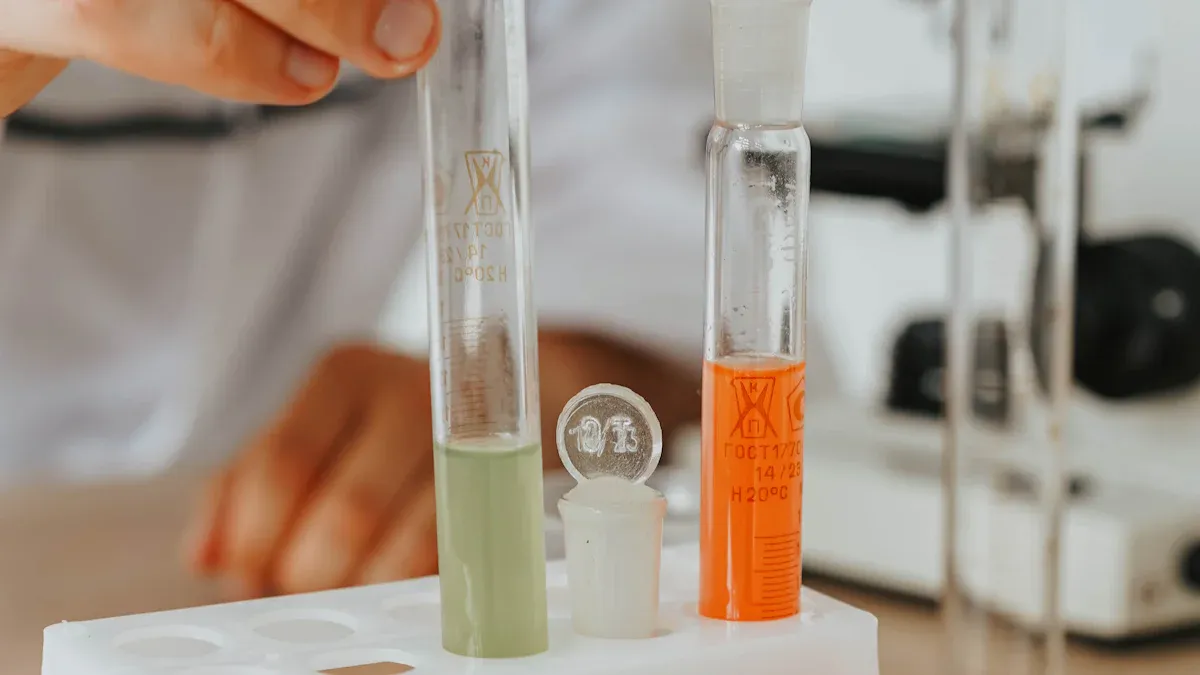
The right equipment helps keep the work safe and correct. Chemists use glass beakers and flasks to mix and heat things. They measure liquids with graduated cylinders and pipettes. Hot plates or water baths heat chemicals gently. Filtration tools like Buchner funnels and filter paper separate solids from liquids. Safety goggles and gloves protect people. Fume hoods take away dangerous vapors.
Tip: Make sure all glassware is clean before you start. Clean tools help stop contamination and give better results.
Safety Guidelines
Safety matters a lot when using chemicals. The table below shows important safety rules and what they mean:
| Safety Protocol | Description |
|---|---|
| Fire & Explosion | Stay away from flames. Use water spray, dry powder, foam, or carbon dioxide for fires. |
| Inhalation | Use exhaust fans or wear breathing masks. Go outside and rest if you feel sick. |
| Skin | Wear gloves. Wash skin with lots of water or shower if chemicals touch you. |
| Eyes | Wear goggles. Rinse eyes with water for several minutes. Get medical help if needed. |
| Ingestion | Do not eat, drink, or smoke while working. Rinse your mouth if you swallow something. |
| Spillage Disposal | Wear a respirator. Sweep up spills and put them in covered containers for safe disposal. |
Chemists must follow these rules to stay safe. They should never work alone in the lab. They should keep emergency numbers close and know where safety showers and eyewash stations are.
Fumaric Acid Production Methods
Fumaric acid is important in many industries. People use different ways to make it. Each way has its own steps and tools. The method you pick depends on purity, cost, and how much you need.
Isomerization of Maleic Acid
A common way to make fumaric acid is by changing maleic acid. This change is called isomerization. Chemists heat maleic acid with a catalyst. The catalyst helps the molecules move around. It does not change their basic parts.
- You can get up to 92% fumaric acid if you do it right.
- Temperature matters for making fumaric acid. More heat helps at first. Too much heat can turn fumaric acid back into maleic acid.
- The time you let the reaction go also matters. The best results come at certain times.
This way is used in labs and factories. It gives pure fumaric acid and a good amount. Scientists use it for small and big batches.
Conversion from Maleic Anhydride
Factories use maleic anhydride to make fumaric acid. Maleic anhydride is a dry powder. When you mix it with water, it turns into maleic acid. Chemists heat this mix with a catalyst to get fumaric acid.
You can make more fumaric acid by heating maleic acid in water with different catalysts. You can also do it without water by melting maleic anhydride and adding maleic acid. This way makes less malic acid. The reaction is controlled by the melted maleic anhydride. The amount of maleic acid in the melted mix can change. About half by weight works best.
This way is good for making a lot of fumaric acid. Factories can control the reaction for better results. Picking the right catalyst and temperature is very important.
Extraction from Iron Fumarate
You can also get fumaric acid from iron fumarate. This way uses a special membrane and a carrier chemical. The membrane lets fumaric acid go through. Other chemicals stay out.
Fumaric acid is taken from iron fumarate using a hollow-fiber membrane with trialkylamine as a carrier. This way gets 89.5% fumaric acid if done well. It also removes lots of organic carbon. This makes the final product cleaner. Scientists look at the feed and strip solutions. They use special ideas to pick the best solvents.
This way works when you have iron fumarate to start. It gives a good amount and helps clean the product.
Biotechnological Production
Some companies use microbes to make fumaric acid. They use special microbes like Rhizopus arrhizus in a stirred-tank reactor. The microbes change sugars into fumaric acid. This way is good for the environment and uses less energy.
One-step fermentation with Rhizopus arrhizus can make up to 51 grams per liter of fumaric acid. The yield is 0.42 grams per gram of glucose. This takes about 96 hours. It makes less wastewater than old ways.
Comparing Methods
The table below shows how much fumaric acid you get, how pure it is, and how much it costs:
| Production Method | Yield (% w/w) | Purity | Cost Comparison |
|---|---|---|---|
| Chemical Process | 112% | High | More expensive |
| Fermentation | 85% | Lower | Three times cheaper |
Each way has good points. Chemical ways give pure fumaric acid and lots of it. But they cost more. Biotechnological ways are cheaper and better for nature. Extraction works well if you start with iron fumarate.
Tip: Picking the right catalyst and reaction setup can change how much fumaric acid you get and how pure it is. Scientists test different catalysts and temperatures to find the best way for each method.
These ways help make enough fumaric acid for food, medicine, and industry. Careful steps make sure the product is high quality.
Purify Fumaric Acid
Purifying fumaric acid is very important. Chemists use different steps to clean it. Each step helps make fumaric acid safer and better. This is needed for food, medicine, and industry.
Recrystallization Process
Recrystallization is a usual way to clean fumaric acid. Chemists mix crude fumaric acid with hot water or sodium hydroxide. They add a salt like iron, nickel, or cobalt. This makes an alkali metal acid salt of fumaric acid. Next, they filter the mix to take out solids. After filtering, they add acid to the solution. This makes pure fumaric acid crystals form. Chemists keep the pH between 2.8 and 5. They also keep the temperature close to 75°C. These steps help crystals grow and keep out impurities.
- Chemists mix crude fumaric acid with hot water or sodium hydroxide.
- They add a salt of iron, nickel, or cobalt.
- They filter the mix to remove solids.
- They add acid to make fumaric acid crystals.
- They keep the pH at 2.8–5 and the temperature at 75°C.
This process takes out many impurities. It helps chemists get a lot of pure fumaric acid. Recrystallization works for cleaning fumaric acid from fermentation broth or chemical synthesis.
Sublimation Technique
Sublimation is another way to clean fumaric acid. Chemists heat the solid until it turns into gas. The gas cools and makes pure crystals. Sublimation separates fumaric acid from things that do not turn into gas. This method is best for small amounts in the lab.
- Chemists heat fumaric acid until it becomes gas.
- The gas cools and makes pure crystals on a cold surface.
- Things that do not turn into gas stay behind.
Sublimation gives very pure fumaric acid. It does not work well for big batches. It helps remove hard-to-clean impurities.
Decolorization Steps
Decolorization makes fumaric acid look better and cleaner. Chemists use special agents to take out color and organic stuff. Activated carbon is often used. It soaks up colors and chemicals like a sponge. Sometimes, chemists use thiourea in a reaction to get crude fumaric acid.
- Activated carbon takes out color and organic impurities.
- Thiourea helps in special reactions to get crude fumaric acid.
A table shows how decolorization methods work:
| Method | Description | Result |
|---|---|---|
| Activated Charcoal | Used as an adsorbent to remove contaminants from the solid. | Recovery yield of 81.2%, purity of 83.5% |
| Precipitation | Dissolve in NaOH, adjust to pH 10, then re-precipitate. | Improved purity of fumaric acid |
Chemists often use decolorization with other cleaning steps. This makes sure the final product is very pure.
Removing Impurities from Fermentation Broth
Cleaning fumaric acid from fermentation broth needs extra steps. Fermentation makes many by-products. Chemists use special systems to separate fumaric acid from these. A hybrid system uses nanofiltration, bipolar electrodialysis, and reactive extraction. This system can get back 60% to 98% of fumaric acid from the broth.
- Nanofiltration separates big molecules.
- Bipolar electrodialysis splits acids and bases.
- Reactive extraction pulls fumaric acid out of the mix.
These steps help clean fumaric acid from fermentation broth. They make it ready for food and medicine.
Tip: Careful cleaning removes common impurities and makes fumaric acid better. Each cleaning method has good points. Chemists often use more than one way to get the purest fumaric acid.
Achieve 99% Pure Fumaric Acid
Troubleshooting Production Issues
Chemists sometimes have trouble getting fumaric acid back. If the temperature is too high or low, they get less product. If the starting materials are not clean, impurities can show up. If crystals do not form, the solution may be too strong or too warm. Chemists should check the pH and temperature many times. Using clean glassware helps stop contamination. If less fumaric acid is made, chemists should check for leaks or spills.
Tip: Watch the reaction all the time. Even small changes in temperature or pH can change how much fumaric acid you get and how pure it is.
Maximizing Yield and Purity
To get the most fumaric acid, chemists pick the best catalysts and keep the right temperature. They use pure starting materials and filter the product well. Recrystallization takes out things that should not be there. Activated carbon helps make fumaric acid look better and cleaner. Chemists often clean the product more than once to get 99% pure fumaric acid. They do not overheat it, so it does not break down. Writing down each step helps chemists remember what works best.
- Pick good quality chemicals.
- Keep the temperature just right.
- Filter and recrystallize again if needed.
- Use activated carbon to take out color.
Purity Verification Methods
Chemists use special machines to check how pure fumaric acid is. These machines can find tiny amounts of impurities. The table below lists some ways to check and how little they can find:
| Method | Detection Limit |
|---|---|
| LC-MS | 0.1 µM |
| GC-MS | ≤1 ppb |
| Capillary Electrophoresis (CE) | 5.34 × 10⁻⁸ mol/L |
These tests help chemists know if the process worked well. They make sure the fumaric acid is good enough for food, medicine, or industry. Chemists keep 99% pure fumaric acid in clean, dry containers so it stays pure.
Note: Test the product often and store it carefully to keep fumaric acid safe and clean.
Making and cleaning fumaric acid has a few key steps. The table below lists the main steps:
| Step | Description |
|---|---|
| 1 | Mix maleic anhydride with water to make maleic acid. |
| 2 | Heat the mix to between 100°C and 250°C. |
| 3 | Filter and wash to get pure fumaric acid. |
People need to follow safety rules and try for high purity. Groups like ISO and ASTM set rules to keep quality good. Many companies now use green ways to help the environment. Good sources and new rules help make production safe and work well.
FAQ
What is fumaric acid used for?
Fumaric acid helps improve flavor and shelf life in food and drinks. It also works in medicines, animal feed, and industrial products. Many companies use it because it is stable and safe.
How should people store fumaric acid?
People should keep fumaric acid in a cool, dry place. They must use sealed containers. This keeps the acid pure and stops it from absorbing moisture.
Is fumaric acid safe to handle?
Fumaric acid is safe when people follow lab safety rules. They should wear gloves and goggles. Good ventilation helps prevent breathing in dust.
Can people eat products with fumaric acid?
Yes, people can eat foods with fumaric acid. Food makers use it as an acidulant. It helps control pH and keeps food fresh.