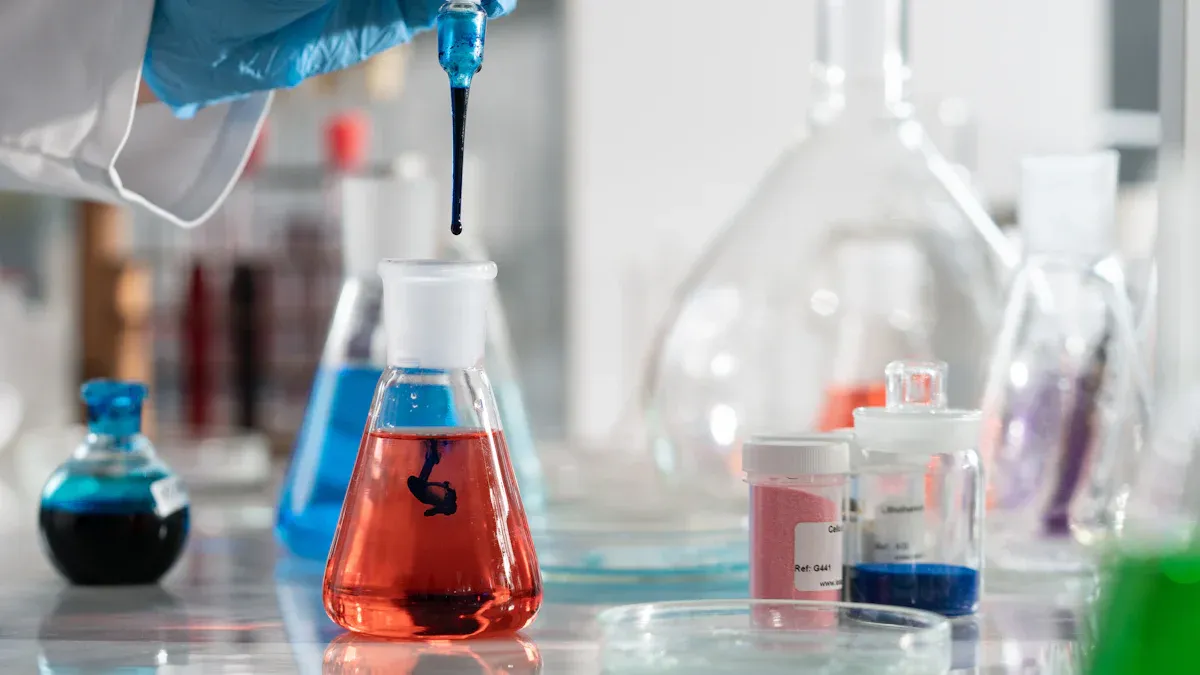
Fumaric acid is made in two main ways. One way is chemical synthesis. Another way is microbial fermentation. Companies use different starting materials. These choices affect cost and the environment. This is important for food and medicine industries.
- People use over 280,000 metric tons of fumaric acid in food every year.
- Fermentation makes up 35% of all fumaric acid produced.
- Almost half of food-grade fumaric acid is used in Asia-Pacific.
Key Takeaways
- Fumaric acid is made in two main ways. These are chemical synthesis and microbial fermentation. These methods affect cost and the environment.
- Chemical synthesis is quick and gives very pure fumaric acid. But it uses fossil fuels, which can hurt the environment.
- Microbial fermentation uses sugars from plants and fungi. This method is better for the environment. It can help lower CO2 emissions.
- Using the right raw materials, like glucose and plant waste, helps make fumaric acid better. It also makes the process more eco-friendly.
- Fumaric acid is used in many things. It helps keep food fresh. It is used in animal feed, industry, and personal care. This makes it very useful.
Fumaric Acid Production Methods
Chemical Synthesis of Fumaric Acid from Maleic Anhydride and Maleic Acid
Chemical synthesis is the main way to make fumaric acid in factories. Manufacturers start with maleic anhydride, which comes from fossil fuels. They add water to maleic anhydride to get maleic acid. Heat and catalysts help change maleic acid into fumaric acid. Catalysts like iodine or metal salts make the reaction faster. The reaction happens at high temperatures, between 100°C and 250°C.
Tip: Chemical synthesis works quickly and makes a lot of fumaric acid. Many industries like this method.
The table below shows the main steps in chemical synthesis:
| Step | Description |
|---|---|
| 1 | Mix maleic anhydride with water to make maleic acid. |
| 2 | Heat the mixture from 100°C to 250°C. |
| 3 | Keep fumaric acid at about 30% solids. |
| 4 | Take out slurry and filter it above 52°C. |
| 5 | Wash the filter cake with water to clean it. |
| 6 | Get fumaric acid with a yield of about 68.4% to 79.7%. |
Chemical synthesis gives fumaric acid that is very pure and always the same. But this method uses petroleum, which can hurt the environment. Many companies now want greener ways to make fumaric acid.
Microbial Fermentation Processes for Fumaric Acid Production
Microbial fermentation is another way to make fumaric acid. Scientists use fungi, mostly from the Rhizopus group, to turn sugars into fumaric acid. Rhizopus arrhizus is one of the best fungi for this job. Other fungi like Mucor, Cunninghamella, and Circinella also help.
| Microorganism | Details |
|---|---|
| Rhizopus species | Best at making fumaric acid with or without air. |
| Mucor species | Found to make fumarate during testing. |
| Cunninghamella | Tested for making fumarate. |
| Circinella | Also tested for making fumarate. |
Microbial fermentation uses things like glucose from plants, not fossil fuels. Fungi grow in big tanks and make fumaric acid. Scientists control how fungi grow and use special ways to get fumaric acid out of the liquid.
- Microbial fermentation can make up to 85% w/w fumaric acid from glucose.
- The highest amount made is 51 g/L with a yield of 0.42 g/g glucose.
- Theoretical yields can be 2 mol/mol glucose by fixing CO2.
Microbial methods do not work as fast as chemical synthesis, but they are better for the planet. Researchers keep improving fermentation by changing microorganisms and making conditions better. Using microbial fermentation helps save resources and protect the environment.
Note: Companies like NORBIDAR use new technology to make pure fumaric acid and help the planet.
Raw Materials for Fumaric Acid Production
Maleic Acid and Maleic Anhydride
Factories use maleic acid and maleic anhydride to make fumaric acid. These chemicals come from oil-based sources like benzene. The price and supply of these materials can change fast. This can make fumaric acid more expensive to make. When prices rise, small companies may struggle to compete with big ones.
Government rules and worries about the environment make companies look for cleaner ways to get these materials.
The purity of maleic acid and maleic anhydride is very important. High purity helps make better fumaric acid. The table below shows where these chemicals come from and how pure they should be:
| Source of Maleic Acid | Purity Requirement for Fumaric Acid |
|---|---|
| Conventional sources | At least about 95% |
| From maleic anhydride vapor | Preferably about 97% to 98%, most preferably about 99% to 100% |
Many industries use these chemicals, like construction, cars, and farming. They are also used in coatings, glues, and medicines. As people want greener products, companies are trying bio-based options for these materials.
Biobased Sources for Fumaric Acid
Scientists and companies now use biobased sources to make fumaric acid. These include glucose, starch, and plant leftovers. Some examples are wheat bran, apple waste, corn straw, and even dairy manure hydrolysate. Using these things can help the environment and support green goals.
- Glucose and starch are main feedstocks.
- Lignocellulosic biomass, like bagasse from sugarcane and energy cane, gives renewable carbon.
- Brewery wastewater and pulp and paper waste also have sugars for fermentation.
Microorganisms like Rhizopus arrhizus and special E. coli can turn these sugars into fumaric acid by fermentation. Some new ways mix breaking down plant material and fermentation in one step. This saves time and energy.
Making fumaric acid from biobased sources can lower CO2 and use less energy, especially with renewable power.
Picking the right raw material changes how much fumaric acid is made and how well the process works. As technology gets better, more companies choose biobased sources for a cleaner future.
Step-by-Step Fumaric Acid Production
Preparation Steps
Manufacturers get ready by following a few steps. They set the fermentation temperature to 34 °C. The stirring speed is kept at 200 rpm. The inoculum has 10^9 spores per liter. After 12 hours, they move 10% of the inoculum to the production medium. The inoculum medium helps fungi grow well. The pH can change freely. This helps make the right pellet shape.
Quality control is very important in preparation. Teams check if the method works well. They pick a good diluent for recovery and stability. The diluent must work with the mobile phase. They watch out for excipients that may cause problems. Acetonitrile is better than methanol. It stops unwanted reactions. Sometimes, they use a subdilution step. This happens if the diluent is too strong for the HPLC mobile phase.
Synthesis and Fermentation
Many things affect how much fumaric acid is made. The table below shows what each factor does:
| Process Parameter | Effect on Fumaric Acid Yield |
|---|---|
| Substrate Concentration | Good levels help pellets form and raise yield. |
| Pellet Morphology | Small pellets make more fumaric acid. |
| pH | Lower pH makes smaller pellets. |
| Moisture Levels | Changes fungus shape and yield. |
| Temperature | Changes pellet shape and fumaric acid yield. |
Operators watch these things closely. They change substrate concentration and pH. This helps make small pellets. They also check moisture and temperature. This helps get more fumaric acid.
Fumaric Acid Purification
After making fumaric acid, teams start to clean it. They use activated carbon to remove color. Thiourea is added for a special reaction. This gives crude fumaric acid. The process uses heating, filtering, and drying. These steps make fumaric acid very pure. Solvent extraction helps separate fumaric acid from water. Liquid-liquid extraction works well and is very selective. Adding long chain aliphatic amines or organophosphorus extractants helps even more.
Tip: Careful cleaning makes sure fumaric acid is safe for food, medicine, and industry.
Recent Advances in Fumaric Acid Production
Green Chemistry
Green chemistry is changing how companies make fumaric acid. Many scientists now use renewable resources instead of oil. BASF works with colleges to make a biobased process. They use Basfia succiniciproducens to turn sugar and carbon dioxide into fumaric acid. This new way could replace old methods that use oil. Scientists also use immobilized Rhizopus oryzae and A. pullulans var. aubasidani. These microorganisms can use carbon dioxide and make fumarate well. This helps the world stay healthy.
Metabolic engineering is very important for these changes. Experts create new ways to make more fumaric acid. They often use waste from farms, like plant leftovers, to help the planet. Green chemistry has many good points:
- Old ways use oil, which is bad for nature.
- Bioproduction uses plant waste, so it is better for the earth.
- These ways cost less and help with the “food or fuel” problem.
Many companies now pick green chemistry to help the earth and work better.
Biotechnological Innovations
Biotechnological innovations help make more and cleaner fumaric acid. Scientists use farm waste like apple pomace and orange peels. These things can make a lot of fumaric acid. For example, apple pomace gives 79.3 g/L, and glucose gives 195 g/L. Finding strong microorganisms also helps make more fumaric acid. Strains like R. arrhizus NRRL 1526 and SN5 work well and are tough. Early tests with these strains made up to 93.5 g/L fumaric acid.
A new cleaning process now gets over 98% pure fumaric acid. This way lets teams get fumaric acid out of the liquid easily. The table below shows these new ideas:
| Innovation/Process | Description | Results |
|---|---|---|
| Use of Agricultural Residues | Making fumaric acid from apple pomace and orange peels | 79.3 g/L (pomace), 195 g/L (glucose) |
| Microorganism Screening | Strong strains like R. arrhizus NRRL 1526 | 93.5 g/L in tests |
| Purification Process | New way to get high purity | >98% purity |
NORBIDAR keeps working on new technology and green ways. The company wants to meet rules and give very pure fumaric acid.
Companies and scientists work together to make production better, greener, and safer for the earth.
Fumaric Acid Applications
Food and Beverage
Fumaric acid is used in many foods and drinks. It helps keep food fresh and safe. It also makes drinks and candies taste tart. Food makers use it as a preservative and acidulant. It helps food last longer and taste better. The table below shows how fumaric acid works in foods:
| Application Type | Description |
|---|---|
| Preservative | Stops bacteria and keeps food fresh longer. |
| Acidulant | Adds tartness to drinks and fruit juices. |
| pH Regulator | Helps baked goods rise and keeps dough stable. |
| Flavor Enhancer | Gives candies and snacks a strong, tangy taste. |
| Stability | Works well in dry foods because it does not absorb water. |
| Cost-effectiveness | Needs less product than other acids, saving money. |
Groups like the FDA and EFSA say fumaric acid is safe. You can find it in soft drinks, baked goods, jams, and plant-based yogurts.
Animal Nutrition
Farmers put fumaric acid in animal feed. It helps animals digest food better. Animals like the taste, so they eat more. Fumaric acid keeps feed fresh by stopping mold and bacteria. Some studies show it can lower methane from cows and sheep. This helps the environment.
- Helps animals digest food better
- Makes feed taste better
- Stops mold and bacteria in feed
- Supports animal growth and health
Industrial Uses
Many industries use fumaric acid because it is strong and stable. It helps make resins and plastics that resist heat and chemicals. Fumaric acid is also used in cleaners and detergents. In medicine, it helps drugs stay stable and dissolve better.
| Industrial Application | Properties and Benefits |
|---|---|
| Resins | Makes plastics and coatings stronger and more heat-resistant |
| Plastics | Used in plasticizers and reinforced plastics |
| Pharmaceuticals | Improves drug stability and helps fight germs |
| Cosmetics | Adds antioxidants to skin care products |
| Cleaners | Used in detergents and cleaning products |
NORBIDAR’s fumaric acid is very pure and works well. Many industries choose it for their products.
Personal Care and Pharmaceuticals
Fumaric acid helps make skin care and hair care products better. It keeps products stable and helps active ingredients work well. People want safe and natural ingredients, so fumaric acid is popular. In medicine, it helps treat skin problems like psoriasis. It also helps control drug release. Its pH control keeps products safe and effective. Some creams use it to help with swelling.
- Keeps skin care products stable
- Helps deliver active ingredients
- Used in medicines for skin and nerve conditions
- Controls pH for safe and effective products
Manufacturers make fumaric acid in two ways. They use chemical synthesis or microbial fermentation. Each way has steps to follow. First, they pick the raw materials. Then, they clean and purify the product. New ideas use green chemistry and better technology. Making high-quality fumaric acid is important. It is used in food, animal feed, industry, and personal care. These changes help keep products safe. They also make fumaric acid more valuable.
FAQ
What is fumaric acid used for?
Fumaric acid keeps food fresh and makes it taste tart. It helps animals get more from their food. Factories use it in plastics, resins, and cleaners. You can also find it in personal care items and medicine. It helps these products stay stable and work well.
How do companies make fumaric acid?
Companies use two ways to make fumaric acid. One way is chemical synthesis, which starts with maleic anhydride. The other way is microbial fermentation. This uses fungi to change sugars into fumaric acid. Both ways give pure fumaric acid for many uses.
Is fumaric acid safe to eat?
The FDA and EFSA say fumaric acid is safe in food. People can eat it in drinks, baked goods, and candy. Companies follow strict rules to keep it safe for everyone.
Can fumaric acid come from plants?
Yes! Scientists use things like glucose, starch, and farm waste from plants. Microorganisms turn these into fumaric acid by fermentation. This helps the planet and cuts down on pollution.