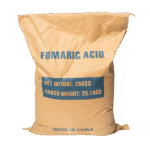
Manufacturers, wholesalers, and suppliers use different methods to determine the quality of fumaric acid. They may perform visual inspection, titration, high-performance liquid chromatography (HPLC), Fourier transform infrared spectroscopy (FTIR), infrared spectroscopy (IR), and enzymatic methods. The following table lists commonly used methods:
| Method | Description |
|---|---|
| High-Performance Liquid Chromatography | It separates parts in a sample with a column and UV light. |
| Gas Chromatography-Mass Spectrometry | It finds tiny amounts and needs special steps for some compounds. |
| Fourier Transform Infrared Spectroscopy | It finds compounds by how they absorb infrared light. |
| Titration Method | It checks concentration using a chemical reaction. |
NORBIDAR’s plant ensures that fumaric acid is produced at extremely high purity. This high purity helps ensure the safety of food and pharmaceuticals, while also improving flavor, texture, and compliance with relevant regulations.
Key Takeaways
- Using different detection methods, such as titration, high-performance liquid chromatography (HPLC), and Fourier transform infrared spectroscopy (FTIR), helps ensure accurate quality testing of fumaric acid. Careful sampling and inspection of the product allows for early detection of problems, thus ensuring the purity of each batch. Regular quality checks, such as proper storage and labeling, guarantee the safety and reliability of fumaric acid.
Fumaric Acid Quality Checks
Sampling and Preparation
Manufacturers, wholesalers, and suppliers must employ rigorous sampling methods. They take samples from each batch. Sampling helps prevent errors in subsequent testing. The team uses clean tools and containers to prevent sample contamination. They will mark the batch number and date on the samples. Reference standards are used during analysis to verify the results. Good sampling helps ensure reliable quality inspection results for each shipment.
Visual Inspection
Visual inspection provides a quick initial assessment of fumaric acid quality. Inspectors will check if the sample is a white, colorless powder and observe for discoloration, clumping, or foreign matter.
Physical Properties
Physical properties indicate whether the fumaric acid is pure and meets standards. Inspectors will measure the melting point. The melting point should be between 286°C and 302°C. They will compare the measurement results with reference standards. NORBIDAR’s fumaric acid content is determined to be between 99.5% and 100.5%. This product meets global purity standards, with a drying loss of no more than 0.5%, a residue on ignition of no more than 0.1%, and low heavy metal content. The main quality indicators are listed in the table below:
| Property | NORBIDAR Standard |
|---|---|
| Assay (%) | 99.5–100.5 |
| Melting Range (°C) | 286–302 |
| Loss on Drying (%) | Max 0.5 |
| Residue on Ignition (%) | Max 0.1 |
| Maleic Acid (%) | Max 0.1 |
These checks help manufacturers, buyers, and suppliers make sure each batch of fumaric acid is safe and high quality.
Fumaric Acid Analysis Methods
Titration
Titration is a common method for determining the purity of fumaric acid. It helps determine the purity of fumaric acid. This method is rapid and inexpensive. The steps are as follows: First, mix 0.500 g of fumaric acid with 50 mL of water. Then, add 0.5 mL of phenolphthalein solution as an indicator. Next, add 1 M sodium hydroxide solution to the mixture. Each mL of sodium hydroxide solution contains 58.04 mg of fumaric acid. Calculate the purity percentage using the following formula: Dry basis percentage = (Standard reference value × Actual molar concentration × 58.04 × 100 × 100) / (1 × Sample weight (g) × (100 – Water)). Titration is an effective method for determining the fumaric acid content of each batch. However, the results may change if impurities are present. For best results, the team should use clean glassware and standard references. They should also perform multiple tests to ensure consistent results.
High Performance Liquid Chromatography (HPLC)
High performance liquid chromatography (HPLC) is a relatively new method for the detection of fumaric acid. It is a high-performance liquid chromatography method that separates fumaric acid from other compounds, such as maleic acid. This method uses a chromatographic column and a UV-Vis detector. Fumaric acid absorbs light most strongly at 215 nm. HPLC can help detect extremely small amounts of impurities. HPLC can detect fumaric acid at concentrations as low as 0.0226 µg/ml (0.001%). Its lowest measurable concentration is 0.0712 µg/ml (0.004%). Recovery rates are between 99.1% and 100.75%, indicating that the method is very accurate. HPLC is examined for its specificity, linearity, accuracy, precision, and robustness. High performance liquid chromatography (HPLC) provides clear results by separating and measuring compounds. The team uses HPLC to ensure that each batch meets specifications. They review the results and compare them to reference standards. The presence of any unusual peaks may indicate the presence of impurities.
Fourier Transform Infrared Spectroscopy (FTIR) and Infrared Spectroscopy (IR)
FTIR and IR spectroscopy are crucial for the detection of fumaric acid. These methods use infrared light to examine and confirm purity. Each compound absorbs infrared light at its specific wavelength, thus forming a unique spectrum. For example, fumaric acid has a peak at 1685 cm⁻¹, and maleic acid has a peak at 1708 cm⁻¹.
FTIR gives clear pictures that help tell fumaric acid apart from maleic acid. This method saves time and keeps things safe in factories. FTIR and IR spectroscopy can also find impurities and check the quality of the sample. Teams need to get samples ready the right way and use clean tools. They should compare the spectrum to reference data to make sure it is correct.
| Advantage/Disadvantage | Description |
|---|---|
| Advantage | FTIR gives clear spectra to tell fumaric acid from maleic acid. |
| Advantage | It saves time and keeps things safe in factories. |
| Advantage | FTIR can find impurities and check purity. |
| Disadvantage | Getting samples ready can make it harder to use sometimes. |
| Disadvantage | Other substances in mixtures can make results less accurate. |
Enzymatic Assay
Enzymatic assay is another method for detecting fumarate. This method uses an enzyme that reacts only with fumarate. This reaction produces a measurable signal. Enzymatic methods are used to determine the fumarate content in food, feed, and pharmaceuticals. This method is highly specific and can detect even trace amounts of fumarate. The experimental team should follow the kit instructions and set up the instrument correctly.
Tip: For the best results, people should use more than one method. Using titration, HPLC, and infrared spectroscopy together gives a full view of fumaric acid quality.
Fumaric Acid Interpreting Quality Results
Purity Standards
Manufacturers and suppliers employ very stringent rules to test purity. They compare test results with global standards such as the International Pharmacopoeia (IP), the British Pharmacopoeia (BP), the United States Pharmacopoeia (USP), the U.S. Food and Drug Administration (FCC), and food-grade standards. These rules help factories maintain high product quality and safety. Different certifications indicate product safety and reliability. The table below lists important certificates and documents used for quality testing:
| Certification Type | Description |
|---|---|
| GMP Certified | Facilities manufacturing high-quality fumaric acid |
| GLP Certified | Good Laboratory Practices |
| ISO Certified | International quality standards |
| STAR-K Kosher Certified (USA) | Kosher compliance |
| Fumaric Acid Standards | IP/BP/USP/FCC/Food Grade |
| Certificate of Analysis (CoA) | Batch data for quality assurance |
| Material Safety Data Sheet (MSDS) | Safety information |
| Drug Master File (DMF) | Regulatory submission for drug products |
| Technical Data Sheet | Product specifications |
| Certificate of Origin | Proof of origin |
| Commercial Invoice & Packing List | Shipping and customs documentation |
Common Impurities
Factory owners and wholesalers check for impurities when testing purity. The most common impurities in fumaric acid are water, residues, heavy metals, and maleic acid. These substances can affect product quality and safety. The table below lists the common levels of each impurity:
| Impurity | Typical Concentration Range |
|---|---|
| Water | 0.5% |
| Residue | Not more than 0.1% |
| Heavy metals | 0.001% |
| Maleic acid | Not more than 0.1% |
Manufacturers use special checks to keep impurity levels low. They test every batch to make sure it meets the rules.
Quality Assurance Practices
Suppliers and factories use strict steps to keep fumaric acid quality the same. They do these things:
- Ship fumaric acid in tightly sealed containers so moisture cannot get in.
- Move the product safely and follow rules for non-hazardous chemicals. They keep it away from too much heat.
- Label all shipments the right way and follow all laws and rules.
- Store fumaric acid in a cool, dry place with good air flow. They keep it away from water and things that do not mix well.
- Make sure storage areas have no fire sources and keep the product out of sunlight.
Tip: Regular quality checks help manufacturers and suppliers meet industry rules and send out safe products.
Manufacturers, wholesalers, and suppliers check fumaric acid in different ways. They look at it, do titration, use HPLC, and use FTIR. These steps help make sure the quality is good.
- AR grade fumaric acid is used for high purity.
- Advanced testing methods give results people can trust.
- Recrystallization is done the same way each time to take out impurities.
NORBIDAR checks every batch with very strict rules.
FAQ
How do manufacturers ensure the purity of fumaric acid?
Manufacturers employ specialized biosynthetic and chromatographic analysis methods. They test each batch of product to ensure its purity. Their goal is to achieve a purity value between 99.5% and 100.5%.
What impurities do suppliers test for in fumaric acid?
Suppliers test for moisture, residues, heavy metals, and maleic acid. They strive to keep these impurities at extremely low levels. This helps them meet NORBIDAR’s stringent factory standards.
Can wholesalers request customized quality testing for fumaric acid?
Wholesalers can request specialized quality testing. NORBIDAR can perform tests such as titration, high-performance liquid chromatography (HPLC), and Fourier transform infrared spectroscopy (FTIR). These tests can be tailored to the specific needs of different industries.