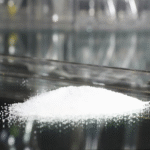
Fumaric acid has many names in science, food, and medicine. You might see these names on ingredient lists or product labels. They can also appear in research papers. The table below lists the most common names for fumaric acid:
| Alternative Name |
|---|
| Fumaric acid |
| trans-1,2-Ethylenedicarboxylic acid |
| 2-Butenedioic acid |
| trans-Butenedioic acid |
| Allomaleic acid |
| Boletic acid |
| Donitic acid |
| Lichenic acid |
Some foods use the code E297 for fumaric acid on labels. All these names mean the same chemical. Knowing these names helps people find fumaric acid in different products.
Key Takeaways
- Fumaric acid has many names. Some are E297, 2-Butenedioic acid, and trans-1,2-Ethylenedicarboxylic acid. Knowing these names helps you find it in products.
- Fumaric acid is used in food to control sourness. It also makes food taste better. It keeps food fresh in bread, drinks, and candy.
- Check ingredient lists for fumaric acid. It might be called E297 or other chemical names. This helps you know what you are eating.
- Fumaric acid is safe to eat, says the FDA and EFSA. It is important to use the right amount.
- Knowing the different names for fumaric acid helps you spot it in products. This makes sure you know what you are eating.
Fumaric Acid: Alternative Names
Fumaric acid is known by many names in science, food, and industry. Each name helps people know how it is used in different places. The next parts group these names by type to make them easy to find.
Chemical Synonyms
Scientists have several chemical synonyms for fumaric acid. These names tell us about its structure and features. Groups like IUPAC list these names:
| Chemical Synonym | Description |
|---|---|
| fumaric acid | Traditional IUPAC name |
| 2-Butenedioic acid | Indicates two carboxylic acid groups |
| trans-1,2-Ethylenedicarboxylic acid | Shows the trans configuration |
| (E)-2-Butenedioic acid | Specifies the E (trans) isomer |
| trans-Butenedioic acid | Highlights the trans form |
| TRANS-2-BUTEN-1,4-DIOIC ACID | Alternative structural name |
| ACIDUM FUMARICUM | Latin-based name |
| FA | Abbreviation used in research |
| fumaric | Shortened form |
Chemists use these names when talking about the molecule or in studies. The CAS number 110-17-8 also helps find this compound in chemical lists.
Food and Regulatory Names
Fumaric acid is used as a food additive in many foods. Food groups and agencies give it codes and numbers. These help people and companies know its uses and benefits. The table below shows the most common food and regulatory names:
| Context | Name/Number |
|---|---|
| Food additive | E297, INS No. 297 |
| Regulatory | COE No.: 25, FEMA No.: 2488, JECFA No.: 618 |
| Functional class | acidity regulator, flavoring agent |
| Synonyms | Allomaleic acid, Boletic acid, Donitic acid, Lichenic acid |
| Latest evaluation | 1999 |
| ADI | Not specified (1989) |
Groups like Codex Alimentarius call fumaric acid INS No. 297. Food labels often use these codes to show it is a food additive. Fumaric acid helps control acidity and adds flavor in drinks, baked goods, and candy. These uses make food taste better and last longer. Using fumaric acid gives better flavor and keeps food fresh.
Common and Trade Names
People may see other names for fumaric acid in trade, industry, or on ingredient lists. These names are often in technical papers or on packages. Some common and trade names are:
- Fumaric Acid (Food and Technical)
- Allomaleic acid
- Boletic acid
- Donitic acid
- Lichenic acid
- bjss
- U-1149
Manufacturers use these names to show fumaric acid is in their products. Listing these names helps people know what is inside and follow rules. Fumaric acid can be made in factories or found in nature, like in mushrooms and lichens. It is used in industry to make resins and to improve food. Fumaric acid is popular because it works well in many areas.
Tip: Always look at ingredient lists for other names. This helps you know how fumaric acid is used in food and other things.
Fumaric acid is a good choice for many uses. It helps control acidity, adds flavor, and is used in making things. People who know these names can find fumaric acid and see how it is used every day.
Origins and Meanings of Fumaric Acid Names
Scientific Naming
Scientists follow rules to name chemicals. The name fumaric acid comes from “Fumāria.” This is a plant called fumitory. Fumitory has fumaric acid in it. Fumaric acid has two carboxyl (COOH) groups. These groups are on opposite sides of an ethylene chain. This shape makes it a geometric isomer of maleic acid.
- “2-Butenedioic acid” tells us about the molecule’s backbone. It means there is a double bond and two acid groups.
- “Trans-1,2-Ethylenedicarboxylic acid” shows the trans form. The acid groups are across from each other.
- “Trans-Butenedioic acid” and “(E)-2-Butenedioic acid” also mean the acid groups are across from each other.
Fumaric acid is a butenedioic acid. This is important because it shares a structure with maleic acid. Scientists use this to guess how fumaric acid acts in reactions and products.
Note: The CAS number for fumaric acid is special. It helps scientists find it in databases.
| Compound | CAS Number | Description |
|---|---|---|
| Fumaric Acid | 110-17-8 | A special code used in science lists to identify the compound. |
Industry Naming
In industry, people use different names for fumaric acid. The name depends on how it is used. Food makers call it E297 or INS No. 297. These codes help companies and regulators track food additives. Fumaric acid is in fruit juices, gelatin desserts, tortillas, and pie fillings. It gives a fruity taste and keeps food fresh. The FDA says fumaric acid is safe to use.
- Fumaric acid is made by changing maleic acid. This is done by a process called catalytic isomerization.
- Other names like allomaleic acid, boletic acid, donitic acid, and lichenic acid come from nature or old naming systems.
Fumaric acid is important in science and industry. Its many names help people know how it is used and what it does.
Where Names Are Used
Food Labels and E Numbers
Manufacturers use different names for fumaric acid on food labels. In the European Union, it is called E297 or INS No. 297. These codes help people find this acid in packaged foods. Fumaric acid keeps food from going bad. It controls how sour or acidic food is. The EU has strict rules for food packaging. Fumaric acid cannot move into food above 60 parts per million. Companies must give lots of data before using new substances. The EFSA checks these petitions to keep food safe. Fumaric acid is found in bread, drinks, and candy. It helps bread stay fresh and taste good.
- In the United States, food labels show fumaric acid by its usual name or E number.
- Materials that touch food must follow safety limits.
Tip: Always look at ingredient lists for E numbers or other names. This helps you spot preservatives in your food.
Pharmaceuticals and Industry
Drug companies use many names for fumaric acid in medicines. These names include trans-butenedioic acid and trans-ethylenedicarboxylic acid. Some products list 2-Butenedioic acid, Allomaleic acid, Boletic acid, Donitic acid, and Lichenic acid. Fumaric acid stops mold and keeps medicine fresh. It helps keep ingredients stable. Using the wrong name for fumaric acid can cause big problems.
| Consequence | Description |
|---|---|
| Civil penalties | Companies may get fines, recalls, or must fix mistakes. |
| Criminal charges | If misbranding is done on purpose, there can be criminal charges. |
| Lawsuits | People hurt by wrong names may sue and ask for money. |
| Regulatory action | Groups like the FDA or FTC can fine or stop companies. |
| Loss of business | People may stop buying, and companies can lose money. |
Medicines use fumaric acid to stop mold and keep biscuits fresh.
Product Ingredients
Ingredient lists in products show fumaric acid and its other names. Fumaric can be an acid, a salt, or an ester. The table below shows common names and types:
| Ingredient Name | Type |
|---|---|
| Fumaric Acid | Acid |
| Disodium Fumarate | Salt |
| Sodium Fumarate | Salt |
| Ferrous Fumarate | Salt |
| Dibehenyl Fumarate | Diester |
| Di-C12-15 Alkyl Fumarate | Diester |
| Diethylhexyl Fumarate | Diester |
| Diisostearyl Fumarate | Diester |
| Sodium Stearyl Fumarate | Monoester |
Manufacturers use fumaric acid because it keeps food fresh. It helps control acidity and stops food from spoiling. Fumaric acid is found in bread, snacks, and drinks. Its strong buffering power makes it useful in many products.
Fumaric acid has many names like trans-1,2-ethylenedicarboxylic acid, 2-butenedioic acid, and E297. You can find these names on food packages, in science papers, and in factories. Learning these names helps people know what is in different products. If someone sees fumaric acid or another name, they can spot it fast. This helps people make safe choices and talk clearly about what is inside.
Knowing these names helps everyone learn about ingredients in things we use every day.
FAQ
What is the main use of fumaric acid in food?
Fumaric acid helps control how sour food tastes. It also makes food taste better. Food makers put it in bread, drinks, and candy. It helps food stay fresh.
Is fumaric acid safe to eat?
Groups like the FDA and EFSA say fumaric acid is safe. It is safe if used in the right amount. People can eat foods with fumaric acid without worry.
How can someone spot fumaric acid on a label?
Check ingredient lists for these names:
- Fumaric acid
- E297
- INS No. 297
Sometimes, labels use chemical names like 2-butenedioic acid.
Does fumaric acid have any natural sources?
Fumaric acid is found in some plants. It is also in mushrooms and lichens. Factories can make fumaric acid for food and industry.