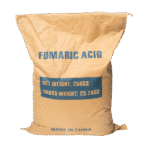
Fumaric acid has a very high melting point, around 287°C. If heated to even higher temperatures, fumaric acid typically decomposes rather than liquefies. This property has changed the way fumaric acid is used in food, factories, and laboratories.
| Application Type | Description |
|---|---|
| Food Additive | Used to keep processed foods stable and make them taste sour. It also helps control acidity. |
| Industrial Use | Used as a starting material to make resins, coatings, and plasticizers. |
| Laboratory Applications | Used as a middle step in making fine chemicals and in many chemical processes. |
Key Takeaways
- Fumaric acid has a high melting point of approximately 287°C. This makes it stable in many applications. It vaporizes at around 200°C, meaning it skips the liquid stage. Fumaric acid is commonly used in food to maintain its stability and helps control its acidity, thus extending its shelf life. In factories, fumaric acid is suitable for high-temperature processes because it remains stable at high temperatures. Always use safe tools and wear protective equipment when heating fumaric acid to avoid health problems.
Does fumaric acid melt?
Melting Point of Fumaric Acid
Unlike most substances, fumaric acid does not melt. People often ask if fumaric acid melts. The answer is yes, but only at extremely high temperatures. Its melting point is approximately 287°C. Scientists use special instruments to determine its melting point. They use differential scanning calorimetry (DSC) and simultaneous thermogravimetric analysis (TG-DSC). These instruments help them find the precise temperature at which fumaric acid undergoes its melting transition. These methods can also demonstrate the stability of fumaric acid at high temperatures.
| Analytical Method | Purpose |
|---|---|
| Differential Scanning Calorimetry (DSC) | Determine melting point and thermal behavior |
| Simultaneous Thermogravimetry and Differential Scanning Calorimetry (TG-DSC) | Analyze thermal stability and decomposition temperature |
| Evolved Gas Analysis (EGA by TG-FTIR) | Identify gases released during decomposition |
NORBIDAR produces high-purity fumaric acid with a purity ranging from 99.5% to 100.5%. This pure fumaric acid has a melting point range of 286°C to 302°C. This high quality means that its melting point remains constant across various applications.
| Specification | Value |
|---|---|
| Assay (%) | 99.5-100.5% |
| Loss on drying (%) | Max 0.5 |
| Melting Range (°C) | 286 – 302 |
Melting Point Range and Decomposition
Fumaric acid begins to change before it completely melts. At about 200°C, it can sublimate from a solid to a gaseous state without melting, a process called sublimation. At this point, its color does not change. When the temperature reaches about 230°C, fumaric acid begins to decompose. It loses water molecules, forming a new compound called maleic anhydride. Therefore, in a typical laboratory setting, fumaric acid does not always melt into a liquid before decomposing.
| Temperature (°C) | Behavior |
|---|---|
| 200 | Sublimes (solid to gas) |
| Does not melt | |
| Does not decompose | |
| Shows no color change | |
| 230 | Starts to decompose |
| Loses water molecules | |
| Forms maleic anhydride |
Physical Changes During Melting
Solid-Liquid Transition
When scientists heat fumaric acid, its behavior differs from most solids. Most substances melt into a liquid at their melting point, but fumaric acid does not. At approximately 200°C, it skips the liquid phase and directly transforms from a solid to a gas, a process called sublimation. During sublimation, fumaric acid does not change color. The molecules of fumaric acid have very strong chemical bonds that maintain their molecular structure, which is why it has such a high melting point.
The high melting point of fumaric acid makes it difficult to dissolve in water. Its molecules are tightly packed, making it difficult for water molecules to break them down. The table below lists the differences between fumaric acid and maleic acid:
| Property | Fumaric Acid | Maleic Acid |
|---|---|---|
| Melting Point | High (287 °C) | Lower |
| Water Solubility | Low (~6.3-7 g/L at 25 °C) | High (478.8 g/L at 20 °C) |
| Molecular Shape | Trans (less polar) | Cis (more polar) |
| Intermolecular Bonds | Strong | Weaker |
| Effect on Solubility | Low solubility | High solubility |
Decomposition vs. Melting
When the temperature goes above 230°C, fumaric acid does not just melt. It starts to break down. This is called decomposition. The molecules lose water. They make a new substance called maleic anhydride. This is a chemical change, not just a physical one. Melting means the substance stays the same but changes form. Decomposition means it turns into something new.
Here is what happens when you heat fumaric acid:
- At about 200°C, it can sublimate without changing its chemical makeup.
- At around 230°C, it starts to decompose. It loses water and makes maleic anhydride.
- This change happens faster as the temperature rises.
Note: Knowing if fumaric acid melts or breaks down helps people use it safely in labs and factories. Understanding the melting point and risk of decomposition gives better results in food, chemical, and industrial work.
Fumaric Acid vs. Maleic Acid Melting
Melting Point Comparison
Fumaric acid and maleic acid are both dicarboxylic acids. However, they behave very differently when heated. Fumaric acid has a much higher melting point than maleic acid, at 287°C, while maleic acid melts at only 135°C. This is a significant difference, stemming from their different molecular structures.
| Property | Maleic Acid | Fumaric Acid |
|---|---|---|
| Melting Point | 135 °C | 287 °C |
Fumaric acid has a much higher melting point than other dicarboxylic acids. Maleic acid has a lower melting point of 139°C. This means that fumaric acid can withstand higher temperatures before undergoing changes.
Applications
The different melting points affect how these acids are used in factories and laboratories. Fumaric acid remains solid at higher temperatures, making it suitable for applications requiring high temperatures. Maleic acid melts more quickly, making it more suitable for rapid reactions that do not require much heat.
| Acid | Melting Point (°C) | Stability Under Heat | Industrial Application |
|---|---|---|---|
| Fumaric Acid | 287 | More stable | Good for high-temperature processes |
| Maleic Acid | 130 – 139 | Less stable | Good for fast reactions in chemical work |
People use fumaric acid in food because it does not break down easily when heated. In making resins and plastics, manufacturers pick fumaric acid because it stays solid and stable. Scientists use fumaric acid in labs when they need something that will not melt or break down quickly. Maleic acid is better when you need something to melt fast or mix easily.
Note: Knowing the melting point of each acid helps people choose the right one. Fumaric acid’s high melting point and stability make it a top pick for many jobs in factories and labs.
Handling and Safety Considerations of
Storage and Stability
Proper storage of fumaric acid ensures its safety and allows it to perform well in a variety of applications. Fumaric acid should be stored in a cool, dry place, away from direct sunlight. Use airtight containers to prevent moisture from entering, thus preventing the powder from clumping. Fumaric acid does not readily absorb moisture from the air, thus maintaining its stability during storage. Due to its stability, fumaric acid helps maintain the freshness of food and animal feed. In bulk packaging, fumaric acid helps control moisture and pH levels and slows down changes in sugar content, thereby extending the shelf life of confectionery and baked goods.
- Fumaric acid helps food last longer by keeping water and pH steady.
- It does not soak up water, so it is good for sugar-coated candy.
- Fumaric acid’s heat stability helps food last longer with less preservatives.
NORBIDAR uses strict safety rules for its fumaric acid. The product follows world safety laws. You can see these rules in the table below:
| Regulation | Details |
|---|---|
| CERCLA | No special reporting needed. Report if you have 5000 pounds. |
| SARA 302 | No need to report under Section 302. |
| TSCA | All parts are on the TSCA list. |
| SARA Section 311/312 | Can cause health problems if not handled right. |
| Clean Water Act | Not listed as a dangerous substance. |
| Clean Air Act | Not listed as a dangerous substance. |
| California Prop 65 | No chemicals that cause cancer or harm babies. |
| EINICS | EC-No.: 203-743-0 |
| WHMIS (Canada) | D2B Toxic materials. |
Safety Heating Procedures
When heating fumaric acid, it’s essential to understand its properties. Fumaric acid melts at high temperatures but may begin to decompose before fully melting. Fumaric acid has a different melting point than other substances. If heated above 200°C, it may turn into a gas or decompose, potentially forming maleic anhydride. For safety, use appropriate heating tools and closely monitor the temperature.
- Always use lab tools when heating fumaric acid.
- Do not use open flames or unsafe heat.
- Wear gloves, goggles, and safe clothes to protect yourself.
Knowing how fumaric acid melts and breaks down is important. This helps in food, animal feed, and factories. In food, knowing the melting point stops bad changes when baking or cooking. In animal feed, stable fumaric acid gives the same results every time. In factories, safe handling keeps workers safe and products clean.
Tip: Always read the label and safety sheet before using fumaric acid for anything.
Fumaric acid can handle a lot of heat. It melts between 286 and 302°C. Its -trans shape makes the crystals fit together tightly. This makes fumaric acid more stable. It also does not dissolve in water easily.
| Property | Description |
|---|---|
| Melting Point | 286–302°C |
People should watch the temperature when heating fumaric acid. They should pick very pure fumaric acid, like NORBIDAR’s, to get good results.
FAQ
What is the melting point of fumaric acid?
The melting point of fumaric acid is approximately 287°C. Scientists use special laboratory instruments to measure this temperature.
Is fumaric acid easily soluble in water?
Fumaric acid is not easily soluble in water. Its molecules are tightly packed, making it more difficult to dissolve than other acids.
What happens when fumaric acid is heated above its melting point?
If fumaric acid is heated above its melting point, it begins to decompose, forming a new compound called maleic anhydride.
Is fumaric acid safe for use in food?
If handled properly, fumaric acid is safe for use in food. Companies follow safety regulations to ensure food safety.
How should fumaric acid be stored?
Store fumaric acid in a cool, dry place, away from direct sunlight and moisture. This will extend its shelf life.