
Recent science studies show fumaric acid does not cause inflammation in people. Researchers found that fumaric acid esters can stop actions that cause inflammation. They also help treat psoriasis and multiple sclerosis. The table below shows some results:
| Compound | Anti-inflammatory Effect |
|---|---|
| Fumaric acid esters | Block pro-inflammatory actions of CRP |
| Dimethyl fumarate | Stops caspase-1 from turning on in macrophages |
Fumaric acid is in many products. People use it in food, medicine, cosmetics, and industrial resins. The world market for fumaric acid was 702 million USD in 2024. Experts think it will keep growing. Studies say fumaric acid esters have stronger anti-inflammatory effects than fumaric acid alone.
Key Takeaways
- Fumaric acid does not make inflammation worse. Studies show it can help lower swelling and inflammation in the body.
- Fumaric acid esters, like dimethyl fumarate, work better than fumaric acid alone. They help treat problems like psoriasis and multiple sclerosis.
- Fumaric acid is safe to use in food and medicine. Groups like the FDA say it is safe to eat.
- Some people may get stomach problems from fumaric acid, but most people do not have trouble. Serious side effects are not common.
- Scientists are still studying how fumaric acid and its esters work. This research may help find better ways to treat diseases with inflammation.
Fumaric acid overview
What is fumaric acid?
Fumaric acid is a small molecule found in nature. Scientists also call it trans-1,2-ethylene dicarboxylic acid or (E)-2-butanodioic acid. Its chemical formula is C4H4O4. This compound was first found in the plant Fumaria officinalis.
- It is part of a group called dicarboxylic acids.
- The molecule has two carboxyl groups. These groups help it change into other chemicals.
- Microorganisms use fumaric acid in their metabolism.
Inside the human body, fumaric acid helps with important metabolic cycles. The table below shows how it moves through different pathways:
| Metabolic Route | Description |
|---|---|
| Reductive TCA Cycle | Changes pyruvate into oxaloacetate. This makes fumarate using malate dehydrogenase (MDH) and NADH. |
| Oxidative TCA Cycle | Turns pyruvate into acetyl-CoA. This leads to fumarate from succinate using SDH. |
| Glyoxylate Shunt | Isocitric acid becomes succinic acid and glyoxylic acid. Then it forms malic acid, but not as well. |
Main uses
Fumaric acid is in many foods and products. It works as a food acidulant, preservative, and flavor enhancer. People also find it in personal care items and medicines. The table below lists common foods and how companies use fumaric acid:
| Food Product Type | Use of Fumaric Acid |
|---|---|
| Beverages | Used to control acidity |
| Baking powders | Works as a food acidulant |
| Wheat tortillas | Used as a preservative and acid for leavening |
| Artificial vinegar flavors | Adds flavor to things like ‘Salt and Vinegar’ chips |
| Stove-top pudding mixes | Used as a coagulant |
Fruits and vegetables also have natural fumaric acid. The table below shows typical amounts:
| Fruit/Vegetable | Typical Fumaric Acid Concentration |
|---|---|
| Grape berries | 0.07 to 10.69 mg/L |
| Wines | Less than 31 mg/L |
| Apples | Present |
| Berries | Present |
| Tomatoes | Present |
| Carrots | Present |
Regulatory agencies say fumaric acid is safe for food and medicine. The table below shows its approval:
| Regulatory Body | Status |
|---|---|
| FDA (USA) | GRAS status for food use |
| EFSA (EU) | No set ADI, safe at normal levels |
| JECFA (WHO/FAO) | Safe for people to eat |
| Pharmaceutical Approval | Dimethyl fumarate approved for MS treatment |
Fumaric acid helps food taste better and last longer. It also keeps products stable. Companies use it because it is safe and useful in many ways.
Fumaric acid and inflammation
Scientific findings
Scientists wanted to know if fumaric acid affects inflammation. They did tests on animals to find out. The tests showed that fumaric acid can lower swelling and signs of inflammation. In these tests, the best dose was 200 mg/kg/day from Fumaria indica. When the dose was higher, up to 5 mg/kg/day, fumaric acid also helped with pain, like aspirin does. This means fumaric acid works in a different way than regular pain medicines.
| Finding | Description |
|---|---|
| Anti-inflammatory effects | Fumaric acid (FA) helps lower inflammation in animal tests. The best dose was 200 mg/kg/day of Fumaria indica (FI). |
| Dose-dependent activity | Higher doses of FA (up to 5 mg/kg/day) help with pain, like aspirin. This shows it works differently than common pain drugs. |
| Bioactive constituents | FA is a main part of FI, but other parts in the extract may help too. |
Fumaric acid is found in many plants. It helps stop signals that cause inflammation. It also helps calm down swelling. Some studies say very high amounts of fumaric acid might cause mild irritation, but this is rare. In skin care, fumaric acid can help soothe skin and lessen redness. Its anti-oxidative effects protect cells from damage by free radicals.
NORBIDAR makes high-purity fumaric acid for food, animal feed, skin care, and other products. Companies use it because it is safe, stable, and works well in many things.
Fumaric acid vs. esters
Fumaric acid and its esters, like dimethyl fumarate and monomethyl fumarate, act differently in the body. Fumaric acid does not get absorbed well in the gut. This means it is not used much to treat diseases. But fumaric acid esters are absorbed better and have stronger anti-inflammatory and anti-oxidative effects.
| Compound | Properties | Clinical Use |
|---|---|---|
| Fumaric Acid (FA) | Does not absorb well in the stomach and intestines. | Not used much in medicine. |
| Dimethyl Fumarate (DMF) | Absorbs well; helps the body make more energy. | Used for psoriasis and RRMS. |
| Monomethyl Fumarate (MMF) | Comes from DMF; boosts anti-inflammatory effects. | Used with DMF for better results. |
| Other Fumaric Acid Esters | Being studied for help with diseases caused by oxidative stress. | Research is still going on. |
Dimethyl fumarate changes how immune cells act. It raises the amount of reduced glutathione in cells. This helps fight damage from oxidative stress. The process uses the Nrf2 transcription factor, which controls the body’s antioxidant system. Dimethyl fumarate also helps the immune system become more balanced. It raises good cytokines like IL-10 and lowers bad ones like IL-6 and TNF-α. In animal tests for multiple sclerosis, dimethyl fumarate lowered inflammation in the spinal cord and protected nerve cells.
Doctors use fumaric acid esters to treat relapsing multiple sclerosis and sometimes psoriasis. Guidelines say these esters are safe and work well for a long time. They help lower inflammation by making more of the anti-inflammatory protein heme oxygenase 1 and helping immune cells work better.
Note: Fumaric acid esters work better and are absorbed more easily than fumaric acid. That is why doctors use esters like dimethyl fumarate to treat diseases with inflammation.
Safety and side effects

Inflammation risks
Doctors have checked fumaric acid safety for many years. Most people do not get inflammation from food or skin products with fumaric acid. Sometimes, people with skin disease or weak immune systems have problems. For example, one patient with severe lymphopenia got a brain infection after using fumaric acid for skin issues. This means people with health problems may have higher risks.
Allergic reactions can happen but are rare. One woman got an itchy rash after taking fumaric acid esters for four days. Her rash went away fast when she stopped the medicine. These reactions do not happen often, but doctors watch for them in skin disease patients.
Food safety groups say people can eat 0-6 mg/kg of fumaric acid each day. Most people eat much less than this amount.
- Acceptable daily intake: 0-6 mg/kg body weight
- Allergic reactions: Rare, usually go away after stopping treatment
Other side effects
People may notice some side effects from fumaric acid or its esters. These side effects mostly affect the stomach and intestines. The table below shows the most common side effects:
| Side Effect |
|---|
| Flushing |
| Diarrhoea |
| Kidney retention |
| Reversible elevation of transaminases |
| Lymphocytopenia |
| Eosinophilia |
| Gastrointestinal complaints |
| Mild stomach upsets |
| Increased frequency of defecation |
| Tenesmus |
| Stomach cramps |
| Tympanites |
Stomach problems are the most common side effect. Clinical trials show 30.9% of patients have stomach issues. Diarrhea happens in 10.8% of cases. Nausea and belly pain are less common. The chart below shows how often these side effects happen:
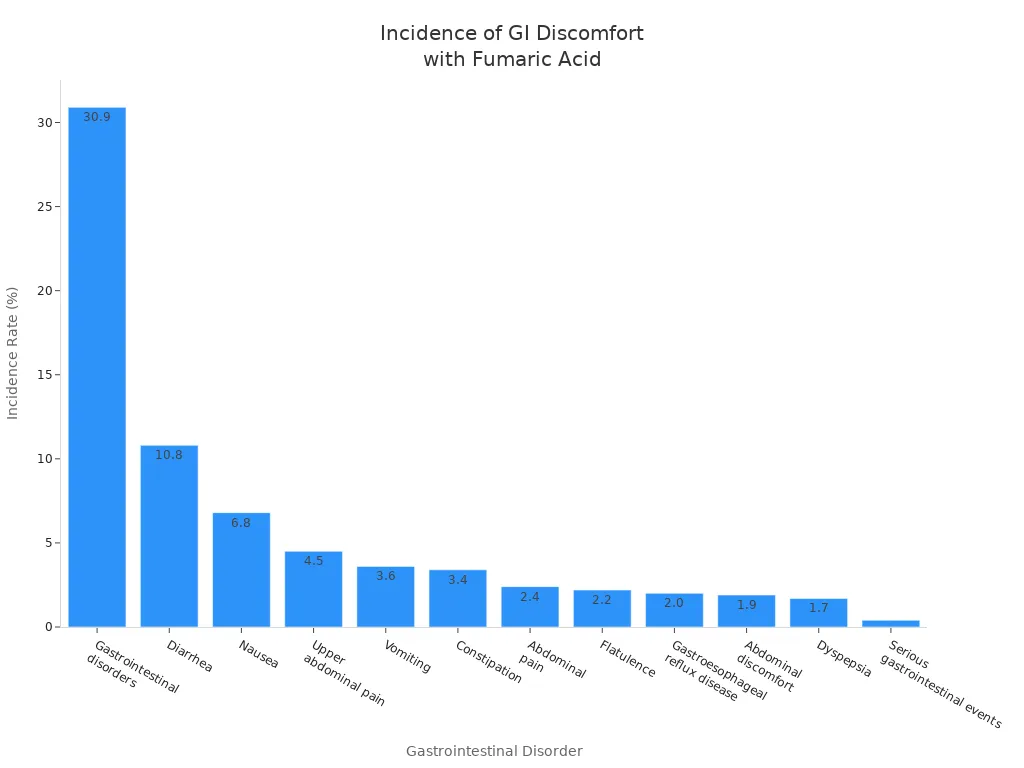
Doctors use fumaric acid esters for skin disease and other problems. Esters work better and cause fewer side effects. Most patients feel fine when using esters. Some people stop treatment because of side effects, but most get better quickly. No new safety problems have been found in recent studies.
Fumaric acid helps treat skin problems by calming irritation and lowering redness. Most people use it safely in food, skin care, and medicine. The safety record is strong for regular use.
Current understanding
What research shows
Scientists have looked at fumaric acid and its esters for a long time. They learned that dimethyl fumarate (DMF) helps people with diseases like multiple sclerosis and psoriasis. DMF lowers how often people get sick again. It also reduces swelling in the body. DMF changes how immune cells work. It makes the body’s defenses stronger. DMF helps dendritic cells make more proteins that fight inflammation, like IL-4 and IL-10.
| Study | Findings | Mechanism |
|---|---|---|
| Therapies for multiple sclerosis | DMF lowered relapse rates by up to 53%. It also reduced inflammation by up to 90%. | DMF helps dendritic cells make more IL-4 and IL-10. |
| Case Studies in Neurology | DMF changes how immune cells act. It raises anti-inflammatory proteins. | DMF blocks harmful cytokines and boosts Th2 cytokines. |
| White Matter Pathology | DMF protects the brain and spinal cord. It stops damage. | DMF turns on antioxidant pathways to lower free radicals. |
| MENACTRIMS guidelines | DMF lowers relapse rates by 49%. It keeps cells safe. | DMF uses the Nrf2 pathway for antioxidant effects. |
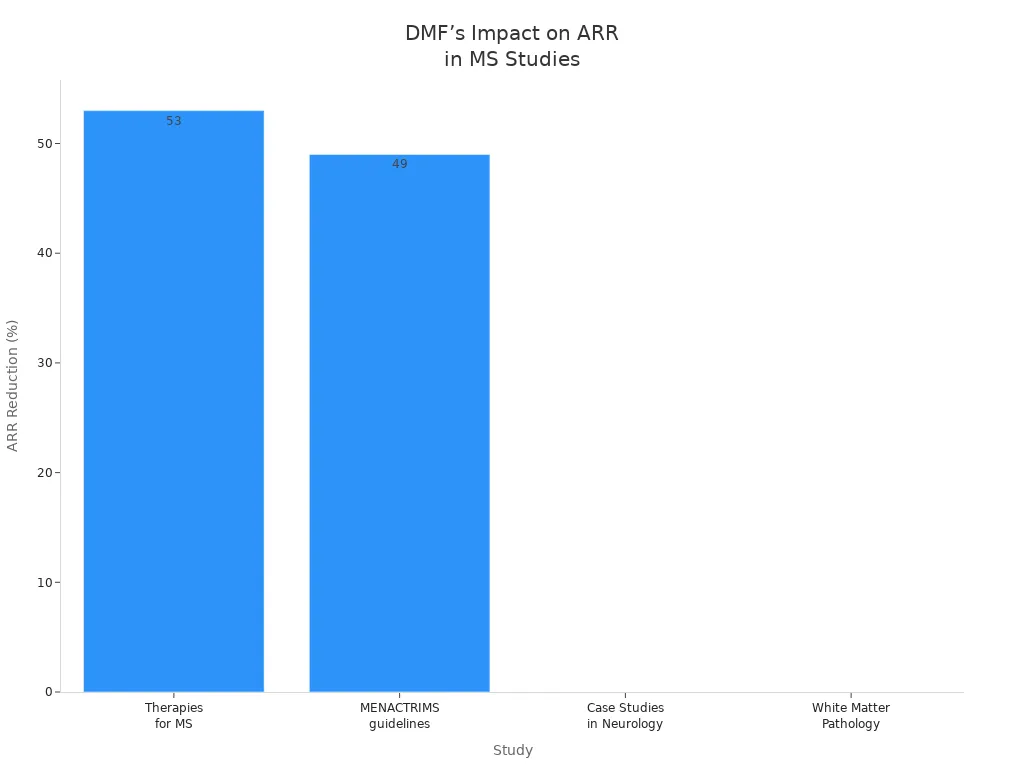
Doctors found DMF helps people with plaque psoriasis. Patients had better skin and felt happier. Most side effects were mild. People felt better after treatment. DMF worked well for different body parts and signs of psoriasis. These results show fumaric acid esters help treat diseases with inflammation.
Gaps and future studies
Scientists still have questions about how fumaric acid and its esters work. Some things need more study:
- Scientists do not know how inflammation and metabolism connect with fumaric acid.
- How fumaric acid and monomethyl fumarate (MMF) fight inflammation needs more research.
- Using fumaric acid for other diseases is not well studied.
- Studies should check if fumarates help with heart problems.
- Researchers want to find new ways to give fumarates. They hope this will make them work better and cause fewer side effects.
- More work is needed to find the best dose and timing for treatment.
- Some studies are unclear because they did not report all their data.
Scientists keep looking for better ways to use fumaric acid and its esters. They hope future studies will answer these questions and help more people with diseases that cause inflammation.
Most studies say fumaric acid does not cause swelling in people. Scientists learned its esters, like dimethyl fumarate, help lower swelling. They do this by changing cell actions and turning on antioxidant systems.
- Fumaric acid is safe in food and animal feed. Groups like the FDA and EFSA agree.
- Some esters help protect the brain and lower bad immune signals.
People should ask a doctor if they worry about their health. Fumaric acid is still used in many products and is trusted.
FAQ
What is the main use of fumaric acid in medicine?
Fumaric acid and its esters help with pain and swelling. Doctors use them for diseases like psoriasis and multiple sclerosis. They help lower pain. Scientists also study how fumaric acid changes crp levels in people.
Does fumaric acid have analgesic properties?
Yes, fumaric acid helps with pain in animal tests. Scientists saw that fumaric acid can lower pain and swelling. This makes it helpful for people with long-lasting pain. Researchers are still learning about its pain-relieving effects.
How does fumaric acid affect crp levels?
Fumaric acid and its esters can make crp go down. Crp shows if there is swelling in the body. Lower crp means less swelling. Doctors check crp to see if a treatment works. Pain relief may also help lower crp and pain at the same time.
Can fumaric acid be used as an analgesic for children?
Doctors do not usually give fumaric acid for pain in kids. Most research is on adults. More studies are needed for children. Parents should ask a doctor before giving any pain medicine to kids. Crp levels in kids can be different from adults.
What is the difference between analgesic and analgesic activity?
Analgesic is something that takes away pain. Analgesic activity shows how well it works to stop pain. Fumaric acid is an analgesic and has analgesic activity. Scientists test how well it works in studies. Crp can change when something has analgesic activity.