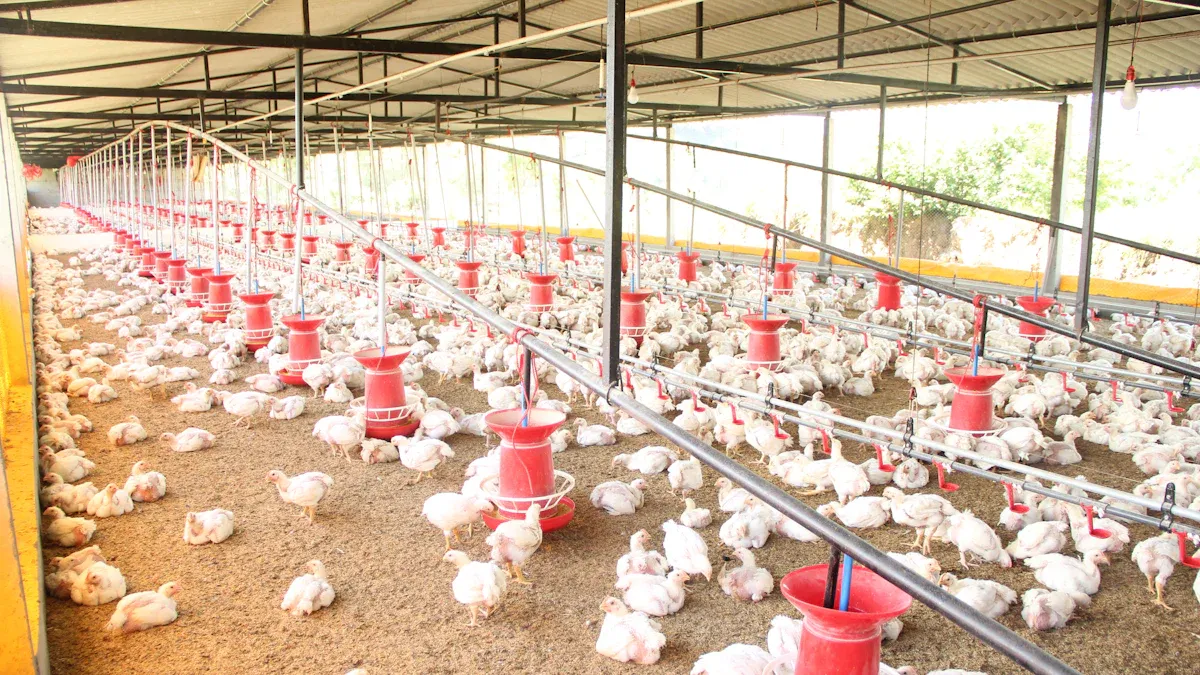
Fumaric acid supplementation helps broiler chickens grow better and use feed more efficiently. Poultry producers and nutritionists notice that chickens get heavier and use their food better. They also see that antioxidant capacity improves. Scientific studies show that birds given fumaric acid gain more weight. They also have higher mineral levels. There are no health risks seen with this supplement.
Key Takeaways
- Fumaric acid helps broiler chickens grow faster. It helps them gain more weight. This improves how well they grow.
- Adding fumaric acid makes feed work better. Chickens turn feed into body mass more easily.
- This organic acid makes the immune system stronger. Chickens stay healthier and fewer die.
- Fumaric acid helps gut health by lowering bad bacteria. Chickens digest food better and get more nutrients.
- Using fumaric acid in feed can make meat better. The meat is firmer and tastes better.
Fumaric Acid Supplementation Overview
Role in Poultry Diets
Fumaric acid is important in chicken diets today. Nutritionists put this organic acid in broiler feed to help gut health. It also helps chickens take in more nutrients. Chickens that eat fumaric acid have changes in their digestive system. The acid lowers bad bacteria like Lactic acid bacteria and Coliforms in the ileum and caeca. This keeps the gut healthy.
| Mechanism | Description |
|---|---|
| Gastrointestinal Microflora | Lowers Lactic acid bacteria and Coliforms in the digestive tract |
| Nutrient Digestibility | Helps birds use more nutrients by reducing losses |
| Secretions Reduction | Makes the gut produce less secretions, which helps nutrient absorption |
Fumaric acid changes how nutrients move in the gut. Birds take in more nutrients because the acid cuts down gut secretions. Microencapsulation lets fumaric acid reach the lower intestine. Here, it works better. Free organic acids get absorbed fast in the upper gut. Microencapsulated acids release slowly, which helps gut health more. Studies show chickens eating fumaric acid have more goblet cells in the ileum. This may help protect the gut lining.
Benefits for Broiler Chickens
Fumaric acid gives many benefits to broiler chickens. Birds grow faster and get heavier when they eat it. The acid raises metabolizable energy, which helps birds grow better. Broilers have stronger immune systems. Their immune organs are bigger and serum globulin levels are higher. Fumaric acid also boosts antioxidants. It raises TAC, SOD, and GPX, but lowers plasma MDA.
- Chickens eating fumaric acid have:
- Faster growth and better feed use
- Stronger immune systems
- Fewer bad gut germs
- Better antioxidant levels
Feed conversion ratio gets better when fumaric acid is used with other acids and oils. This means chickens use their food better, so farmers save money. Lower death rates and better health make fumaric acid a good choice for broiler diets.
Study Design in Diet of Broiler Chicken
Experimental Groups
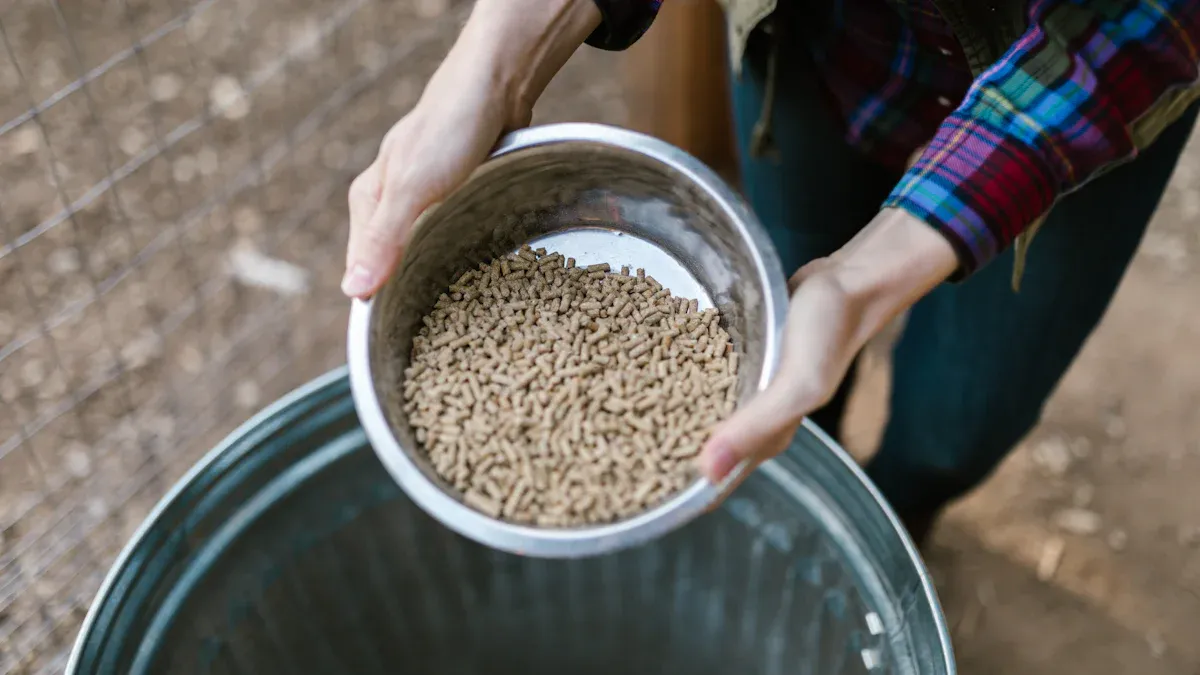
Scientists wanted to see how different diets affect broiler chickens. They split the chickens into groups. One group was the control group. This group ate a normal diet with no fumaric acid. The other groups got diets with fumaric acid at different amounts. This helped scientists learn how fumaric acid changes growth, how well chickens use food, and what germs live in their guts.
The table below shows how the groups were set up in different studies:
| Study (year) | Study design | Treatment arms | Control group | No of birds | Treatment duration (weeks) |
|---|---|---|---|---|---|
| Balak et al (2014) | Single center double-blind RCT | Fumaric acid + cetirizine | Fumaric acid + placebo | 25 | 12 |
| Fallah Arani et al (2011) | Multicenter RCT | Fumaric acid (Dutch formulation) | MTX | 30 | 12 |
| Gollnick et al (2002) | Multicenter double-blind RCT | Fumaric acid + calcipotriol ointment | Fumaric acid + placebo ointment | 68 | 13 |
| Altmeyer et al (1994) | Multicenter double-blind RCT | Fumaric acid | Placebo | 50 | 16 |
Each group let scientists check how fumaric acid changed feed use, weight gain, and how well chickens used nutrients. The study also helped them see changes in gut germs and how chickens used food from their diet.
Parameters Measured
Scientists looked at many things to see how fumaric acid worked. They checked growth, health, and meat quality. The main things they measured were body weight, weight gain, and how much food the chickens ate. They also checked how well chickens digested food and used nutrients. Scientists studied how the diet changed gut germs and how well chickens digested food. They also looked at blood tests to learn about health and diet effects.
- Scientists measured:
- Growth (body weight, weight gain, food eaten)
- How well chickens digested food and used nutrients
- Changes in gut germs
- Blood test results
- Meat quality
Scientists used different math tests to look at the data. They used the Shapiro–Wilk test to see if the numbers were normal. Bartlett’s test checked if the groups had the same spread of numbers. Regression analysis helped find the best amount of fumaric acid for growth and using nutrients.
| Statistical Method | Purpose |
|---|---|
| Normality Testing (Shapiro–Wilk) | To assess the normal distribution of data |
| Homoscedasticity Testing (Bartlett’s) | To check for equal variances across groups |
| Regression Analysis | To determine optimal supplementation levels |
Scientists paid close attention to how well chickens digested food, how much they ate, and how well they used nutrients. They also watched for changes in gut germs and weight. The study design helped them see how organic acids like fumaric acid made chickens digest food better and eat more. This gave a clear idea of how diet changes helped chickens grow and use food better.
Results of Fumaric Acid Supplementation
Growth Performance
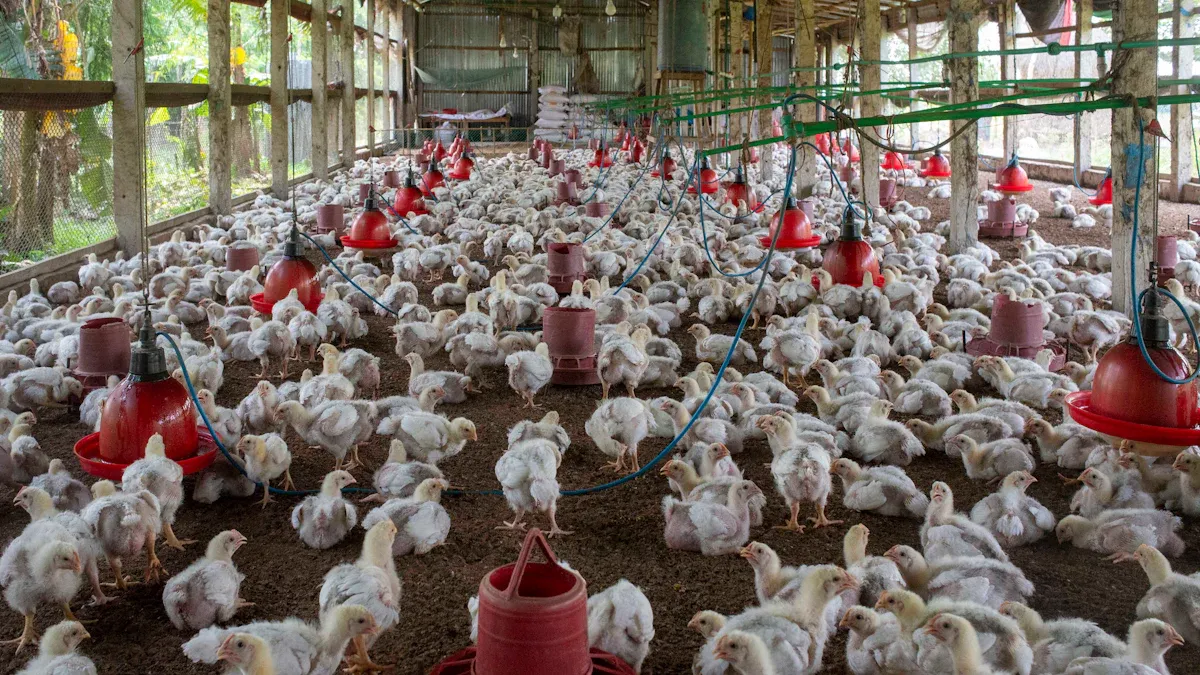
Broiler chickens grew better when they ate fumaric acid. Researchers saw that chickens got heavier and gained more weight. These changes were strongest in chickens under heat stress. Giving 10 g/kg or 15 g/kg fumaric acid helped chickens deal with heat. Chickens in these groups weighed more and grew faster than those without the supplement.
Feed conversion also got better with fumaric acid. Chickens needed less feed to gain weight. This helps farmers spend less money on feed. The feed conversion ratio went down in chickens that got fumaric acid. This means chickens turned feed into body mass more easily.
Fumaric acid helped chickens keep growing well even when stressed.
Health Indicators
Fumaric acid helped chickens stay healthy in many ways. Chickens had stronger immune systems and fought off sickness better. Their antioxidant levels went up. Scientists found higher total antioxidant capacity and lower malondialdehyde. This means less cell damage. These results show fumaric acid protected chickens from stress caused by oxidation.
Chickens also had normal blood tests. Fumaric acid did not hurt blood or organs. Death rates stayed low. Chickens were active and alert during the study. Nutrients kept turning into healthy tissue without problems.
Meat Quality
Fumaric acid made chicken meat better. Scientists found breast muscle pH was higher. The meat was firmer and tasted better. Chickens ate the same amount of feed as before. Feed use improved, and chickens made more lean muscle.
- Chickens eating fumaric acid had:
- Better growth and feed use
- No bad effect on dressing percentage
- No extra belly fat
- No higher death rate
| Meat Quality Parameter | Effect of Dietary Supplementation with Fumaric Acid |
|---|---|
| Breast Muscle pH | Improved |
| Shear Force | Increased |
| Dressing Percentage | No bad effect |
| Abdominal Fat | No bad effect |
| Mortality Rate | No bad effect |
Chickens got better growth and meat quality from fumaric acid. Feed turned into good meat more easily. This makes fumaric acid helpful for poultry farmers.
Discussion on Broiler Chicken Nutrition
Mechanisms of Action
Fumaric acid helps broiler chickens in many ways. When added to their food, it helps them grow and stay healthy. The acid can go inside harmful bacteria cells. This stops bad bacteria and keeps the gut safe. Fumaric acid also makes the digestive tract more acidic. Bad bacteria do not like low pH, so they cannot live well.
- Fumaric acid fights against bad germs.
- It helps the pancreas make more digestive enzymes.
- The acid keeps the gut lining strong and healthy.
Adding fumaric acid to chicken feed changes gut bacteria. It helps good bacteria grow and lowers bad bacteria. The acid also helps make short-chain fatty acids. These are important for a healthy gut. Fumaric acid makes the chyme more acidic. This helps pepsin work better. Chickens digest protein better and grow more.
Note: Fumaric acid helps chickens use food better, so they grow well.
Comparison with Other Additives
Many farmers use organic acids in chicken feed. Fumaric acid is special because it helps the gut and helps chickens use food better. Studies show fumaric acid and butyric acid both make villi taller in the gut. Chickens eating 3% fumaric acid or 3% butyric acid have the tallest villi. Taller villi help chickens take in more nutrients.
| Additive Type | Effect on Villus Height | Benefit for Chickens |
|---|---|---|
| Fumaric Acid | High | Better nutrient absorption |
| Butyric Acid | High | Improved gut health |
| Other Organic Acids | Moderate | Some improvement |
Fumaric acid often costs less than other additives. It gives good results for gut health and growth. Farmers see chickens eat better and stay healthier. Fumaric acid also works well with other acids and oils. This makes it easy to use in many diets.
Practical Implications
Farmers can use fumaric acid in chicken feed to help birds grow and stay healthy. The acid makes the gut more acidic, so bad bacteria cannot grow. It also helps good bacteria like Lactobacillus and Bifidobacterium grow. These good bacteria keep the gut lining strong and help with digestion.
- Fumaric acid in feed makes villi taller and crypts deeper in the gut.
- The acid helps make more digestive enzymes like pepsin and protease.
- Chickens digest protein better and use their food well.
Farmers who use fumaric acid see chickens take in more nutrients and have stronger immune systems. The acid helps lower disease risk and helps chickens grow. Farmers should use the right amount for best results. Checking bird health and feed use often helps chickens do well.
Tip: Using fumaric acid in feed all the time can help chickens and farms in the long run.
Future Directions
Research Needs
Researchers are still learning how fumaric acid helps chickens. They want to find the best amount for each breed and age. Scientists also check how fumaric acid works with other feed additives. They hope to make chickens healthier and help them grow more. Many studies look at how fumaric acid changes gut bacteria. They also see if it helps chickens fight sickness and stay strong.
Some scientists try fumaric acid in layer diets. They want to know if hens lay more eggs or better eggs. Researchers also study how fumaric acid changes broiler meat quality. They use new tools to check antioxidant levels and how well chickens take in nutrients. In the future, they may use better technology to watch gut health. Scientists want to find new mixes of organic acids that work even better.
Note: New research helps farmers use fumaric acid in safer and smarter ways.
Application in Poultry Industry
Farmers and feed makers find many uses for fumaric acid. They put it in broiler feed to help chickens grow and stay healthy. Fumaric acid makes the gut more acidic, which stops bad bacteria. It also helps good bacteria and makes digestion better.
- Fumaric acid helps chickens grow and keeps their guts healthy.
- It fights bad germs by making the gut more acidic.
- Using fumaric acid with other acids can work even better.
- Organic acidifiers help chickens fight sickness and make more antibodies.
- In layer diets, acidifiers can help hens lay more and better eggs.
Feed makers mix fumaric acid with other acids for better results. They use it in both broiler and layer chicken diets. This helps chickens grow, stay healthy, and make better products. The poultry industry keeps testing new ways to use fumaric acid. Farmers watch their chickens and change feed as needed.
Tip: Using fumaric acid often in feed can help chickens grow better and stay healthy.
Studies show fumaric acid helps broiler chickens grow. It also helps them use feed better and stay healthy. Farmers should think about using this supplement. It can help chickens grow faster and stay strong. Farmers can watch their chickens’ health and change the amount used. This helps get the best results. Scientists might study how fumaric acid works with other feed additives. They may also test it in different types of chickens.
FAQ
What is the role of microbiota in chicken health?
Microbiota help chickens break down food and fight bad germs. They live in the gut and help chickens take in nutrients. When microbiota are healthy, the digestive system works well. Farmers check microbiota to help chickens grow and stay healthy.
How does fumaric acid supplementation affect microbiota?
Fumaric acid changes the microbiota in the gut. It lowers the number of bad bacteria and helps good bacteria grow. This change helps chickens digest food better and stay healthy. Scientists study microbiota to see how feed additives work.
Can feed additives improve microbiota diversity in chicken?
Feed additives like fumaric acid make microbiota more diverse. Having many types of microbiota helps chickens fight sickness and use nutrients. Farmers use special feed to help microbiota diversity. This makes chickens stronger and healthier.
Why do scientists measure microbiota in chicken studies?
Scientists measure microbiota to see how feed changes gut health. They count different types of microbiota and see what they do. These tests show how feed affects growth, digestion, and fighting disease.
What is the best way to support healthy microbiota in chicken feed?
Farmers use balanced feed with organic acids to help microbiota. They pick feed that helps good microbiota grow. Farmers check microbiota often to change feed for better chicken health.